
A galaxy is a massive, gravitationally bound system consisting of stars, stellar remnants, interstellar gas, dust, and dark matter. Ranging from dwarfs to supergiants, they contain between a few million to over one hundred trillion stars. A typical large galaxy, such as our Milky Way, contains roughly 100 to 400 billion stars.
Key Details on Galaxies and Star Counts
Definition: Galaxies are organized structures of stars and gas, often with supermassive black holes at their centers.
Average Stars: While dwarf galaxies have fewer than a billion stars, a "typical" large galaxy contains 100–400 billion stars.
Milky Way: Our galaxy is considered relatively average to large, estimated to have 100–400 billion stars.
Range: Galaxies span from dwarf systems with fewer than 1,000 stars to massive, luminous elliptical galaxies holding up to 100 trillion stars.
Total in Universe: Estimates suggest there are roughly 100,000,000,000,000,000,000,000 to 10,000,000,000,000,000,000,000,000
stars in the observable universe.
Galaxies are dynamic, frequently interacting and merging with one another, and are often surrounded by halo components of older stars and globular clusters.
Every single star that you can see in the night sky is contained withing one galaxy, our own, the Milky Way. There are between 100 million and 400 million stars (suns) in the Milky Way Galaxy. There are thought to be at least that many planets orbiting those stars. There are thought to be around 100 billion to 2 trillion GALAXIES in the universe, each containing around 100 million stars on average.

M 33 The Triangulum Galaxy (LRGB)
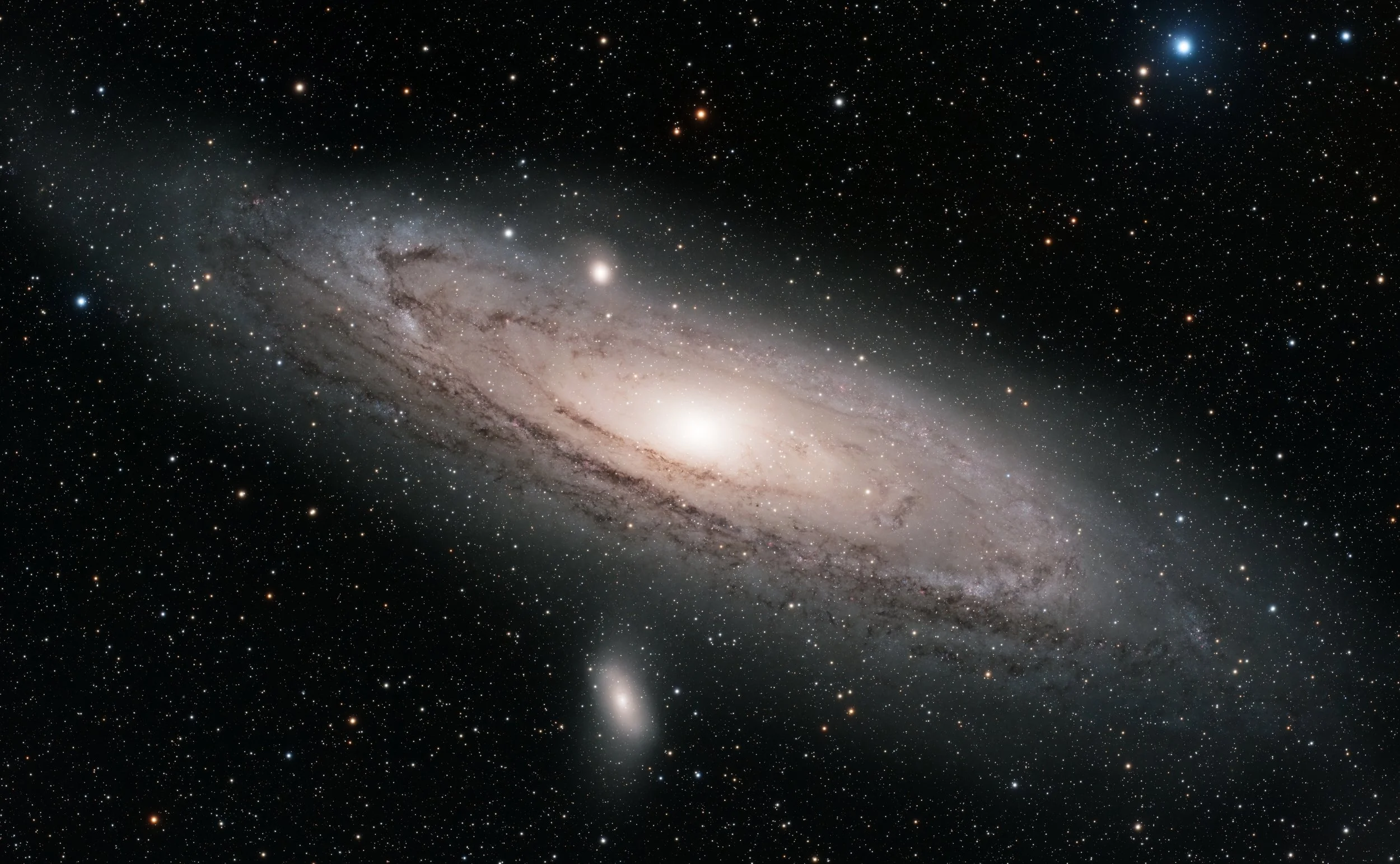
M 31 The Andromeda Galaxy (LRGB)
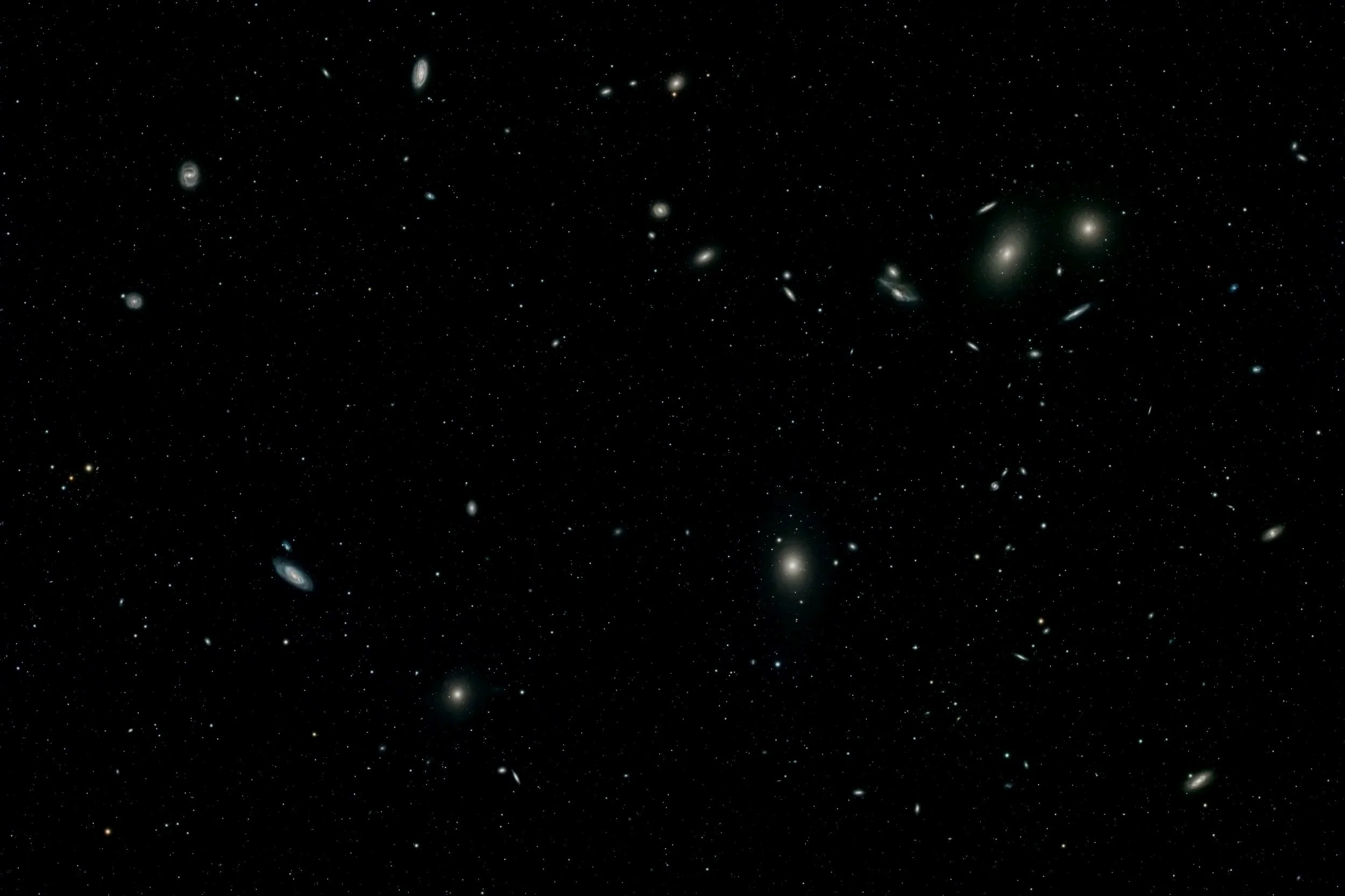
Markarian's Chain of galaxies
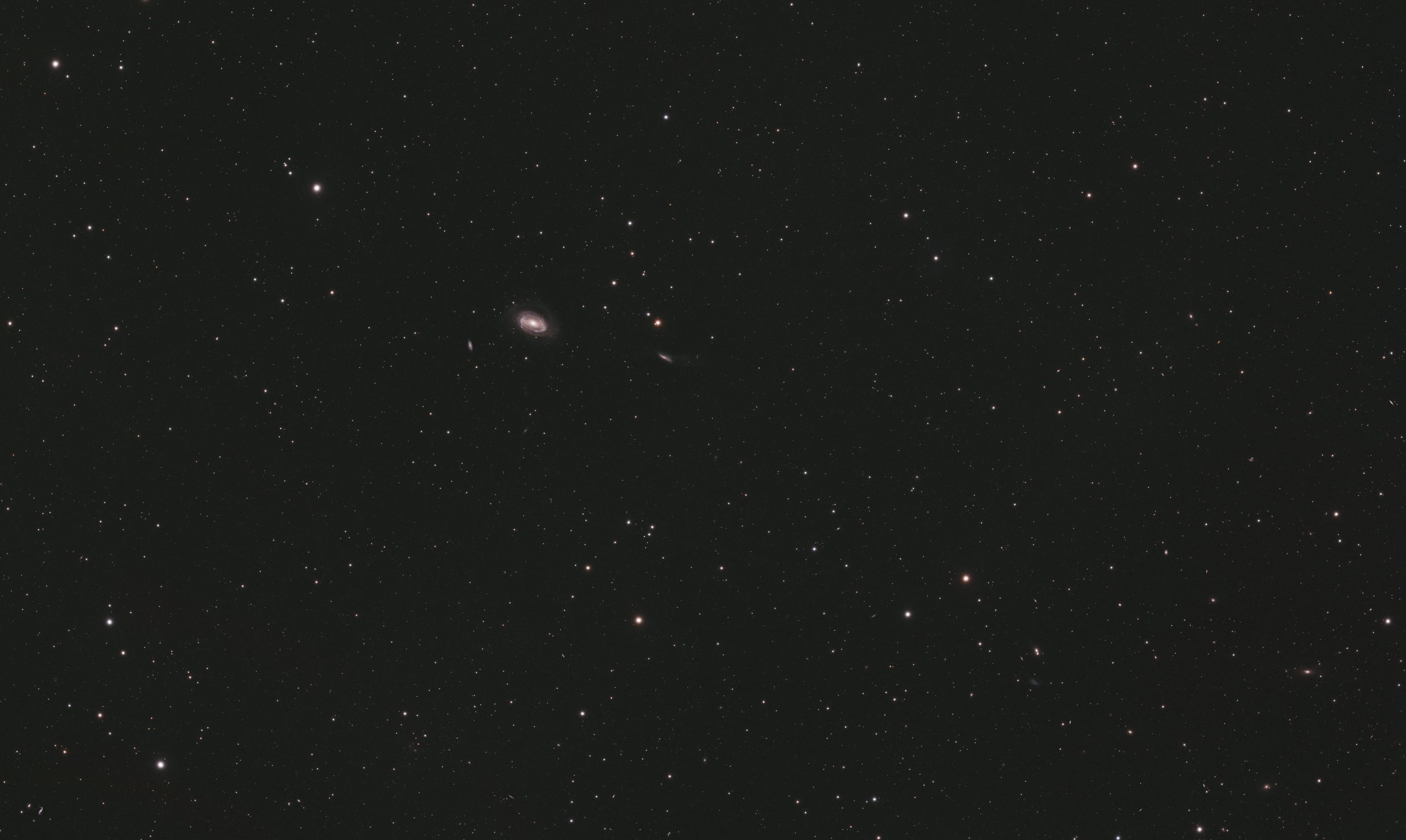
Abell 1656 The Coma Cluster of galaxies
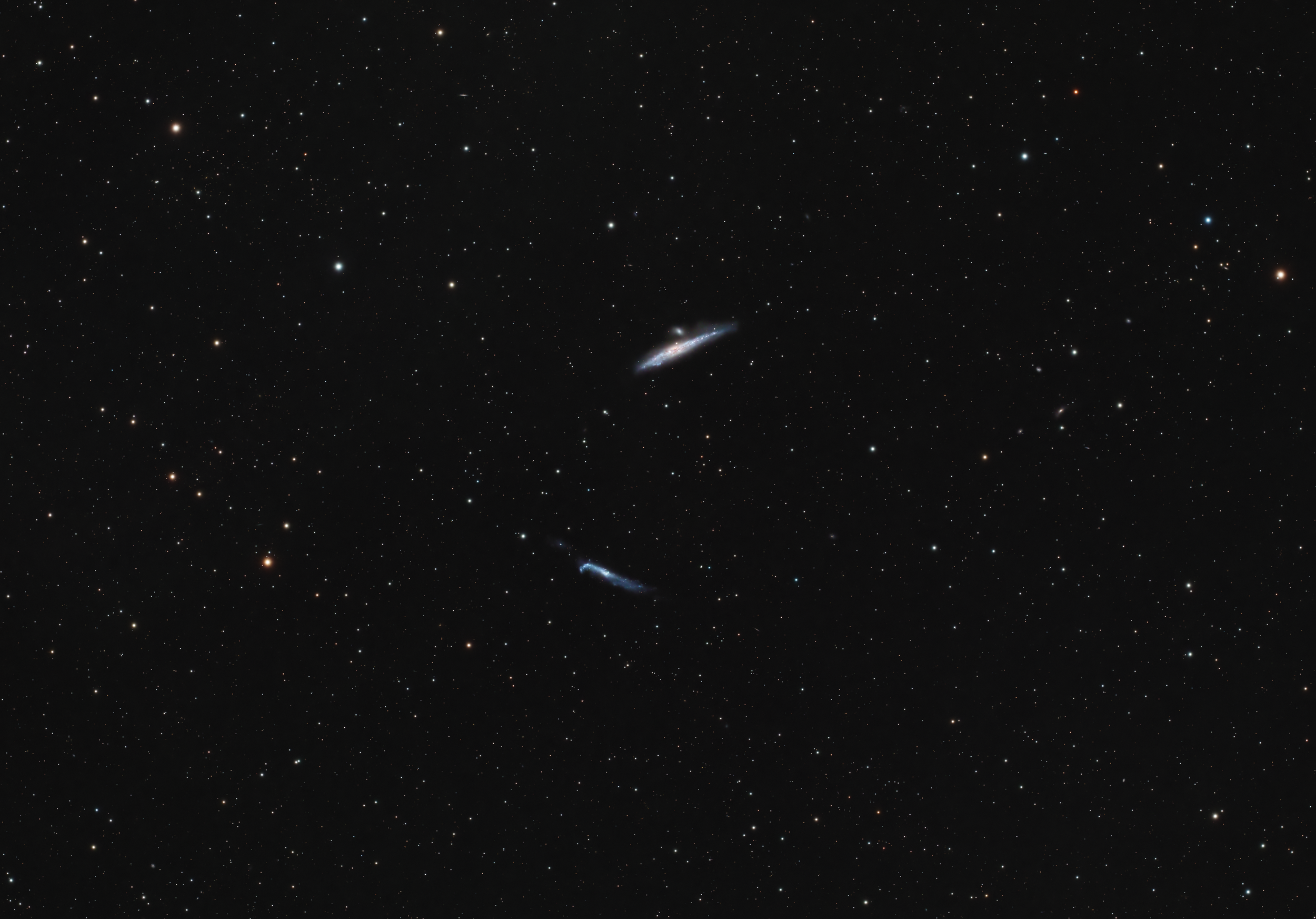
NGC 4656 The Whale and Hockey Stick Galaxies

NGC 891 The Silver Sliver Galaxy

M 104 The Sombrero Galaxy
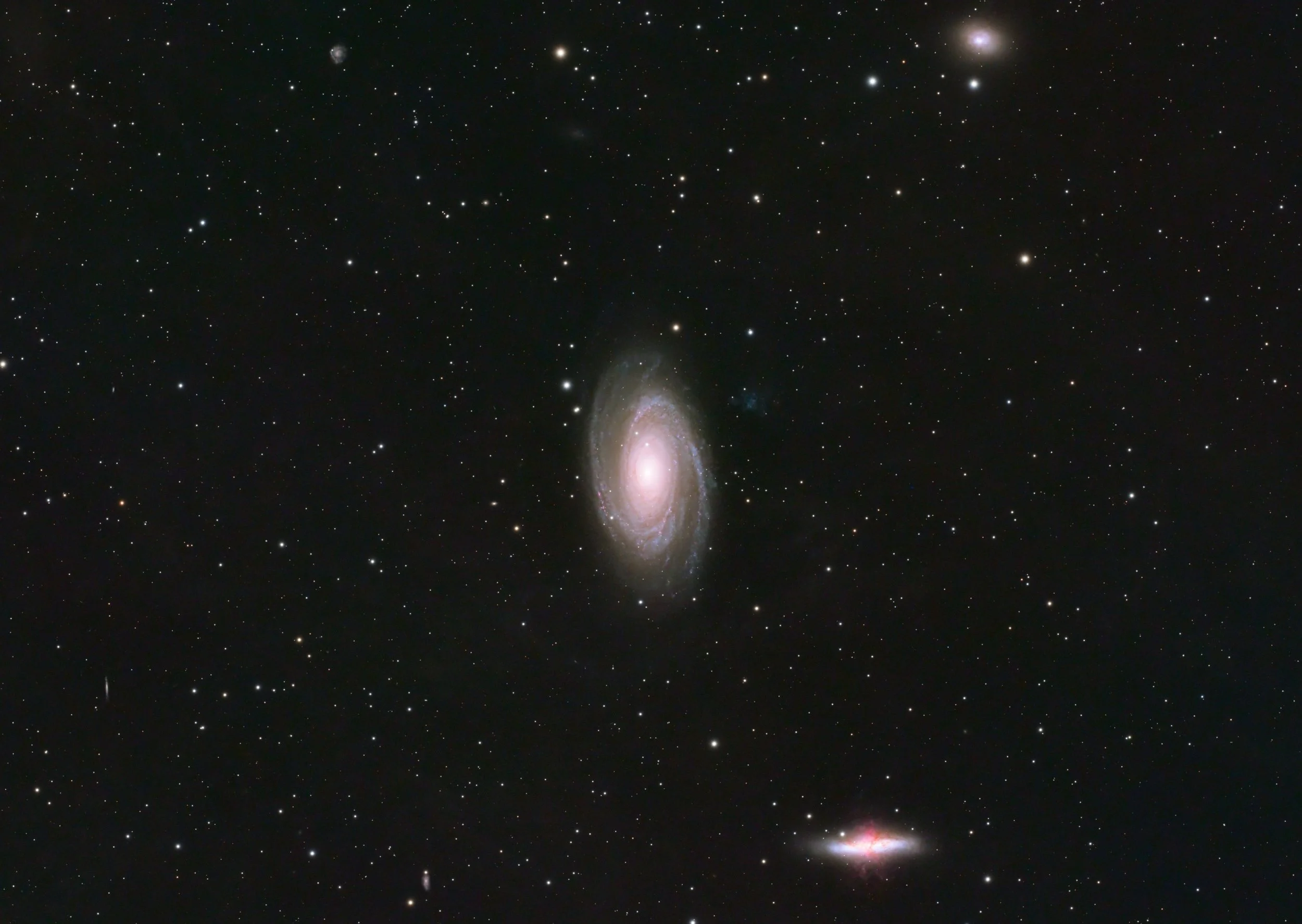
M 81 and M 82 Bode's Galaxy and the Cigar Galaxy

The Leo Triplet of Galaxies
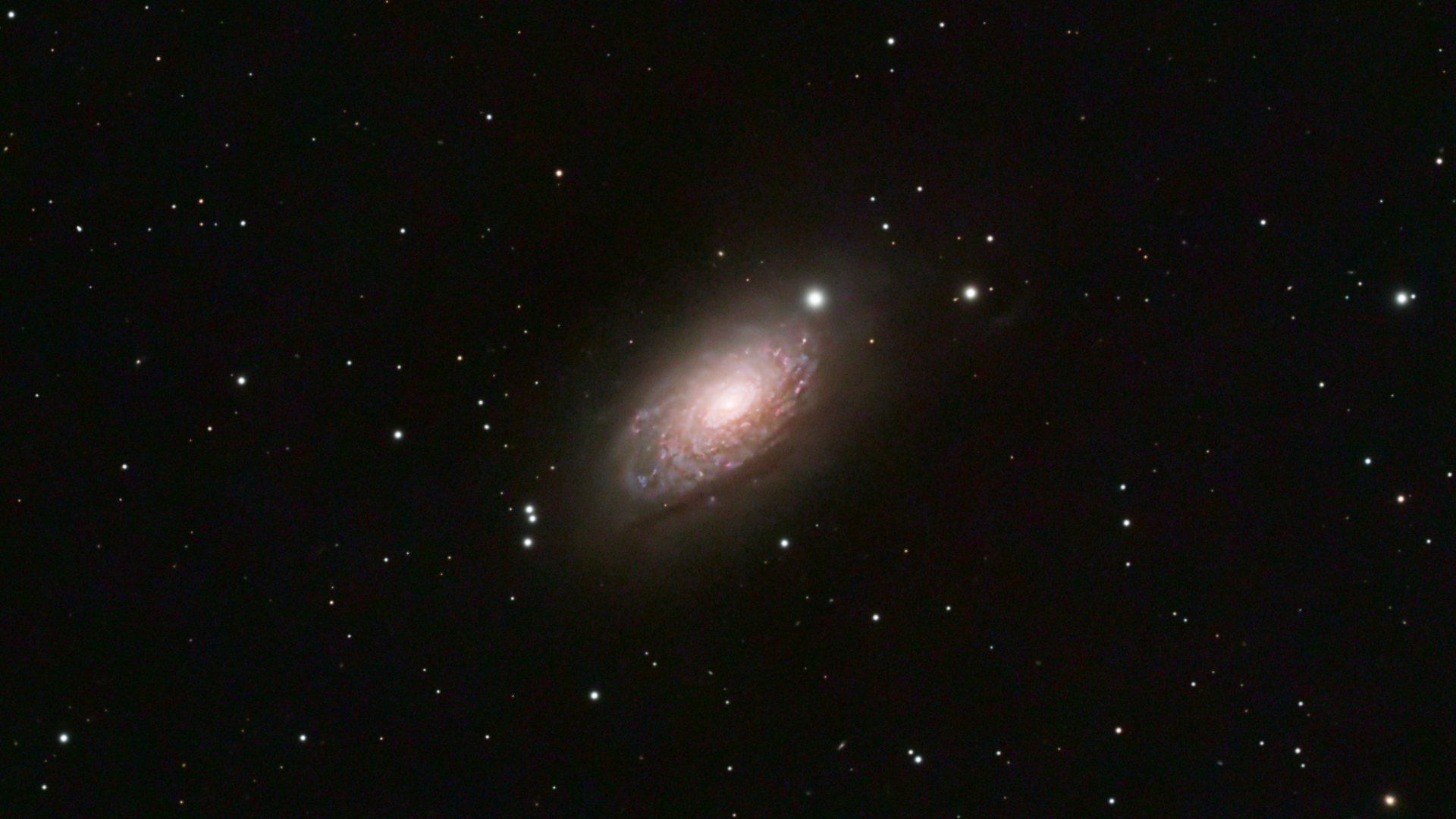
M 63 The Sunflower Galaxy
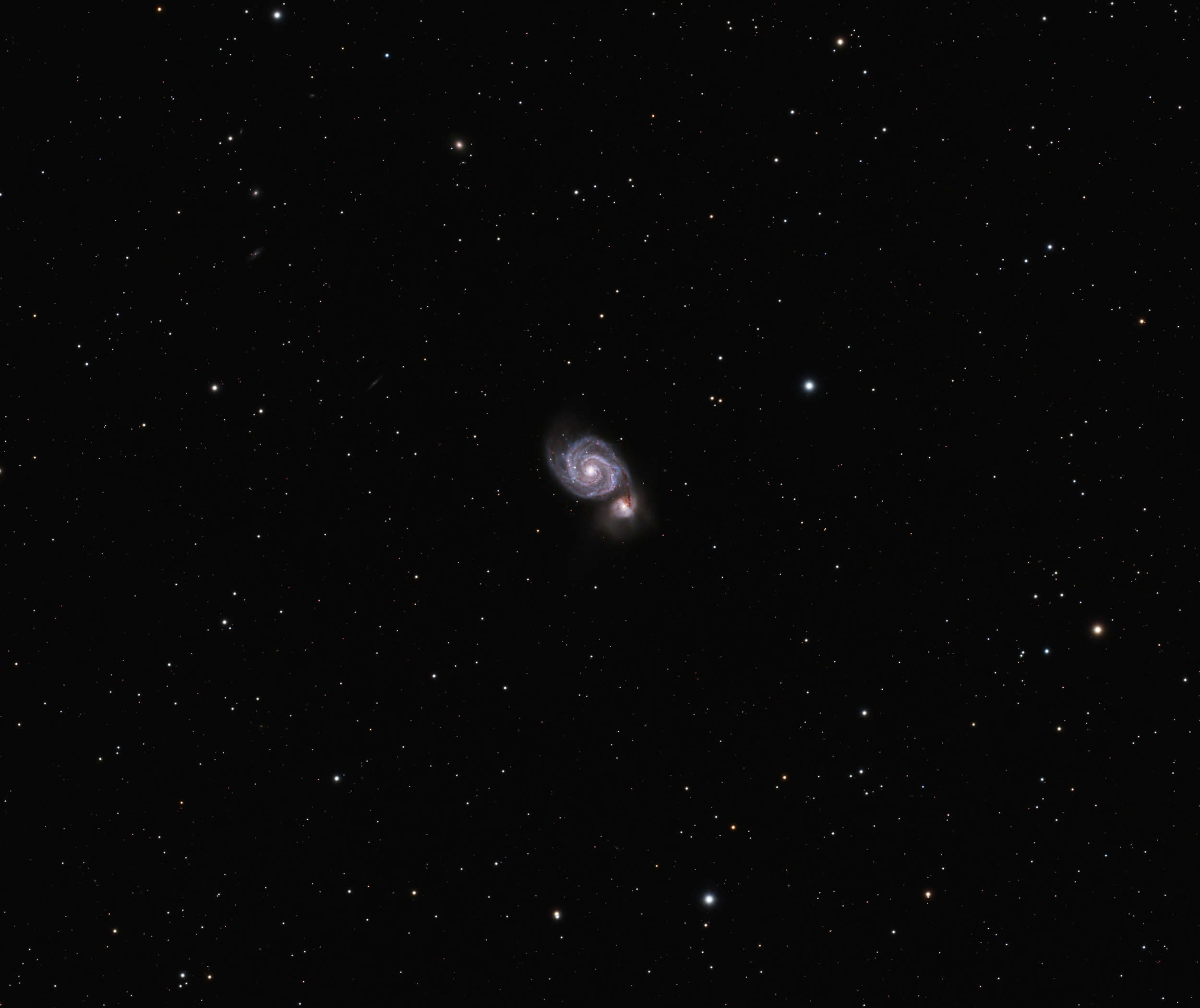
M 51 The Whirlpool Galaxy
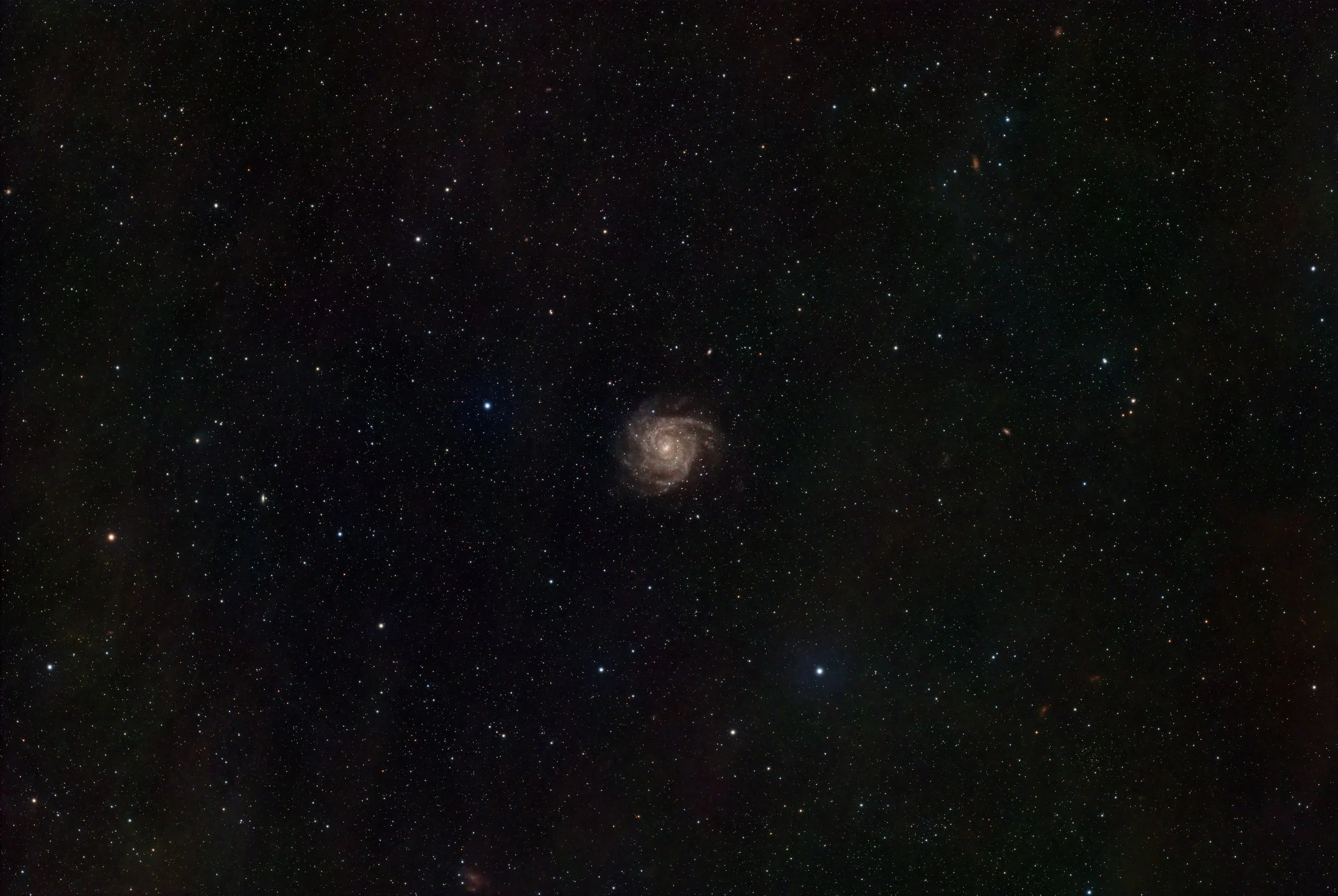
IC 342 The Hidden Galaxy