
A reflection nebula is an interstellar cloud of dust and gas that shines by reflecting and scattering the light of nearby stars. Unlike emission nebulae, they do not emit their own visible light but scatter blue light more efficiently, causing them to appear blue. They often surround young stars, such as in the Pleiades cluster.
Key Characteristics and Facts:
Color and Appearance: They are typically blue, because the small dust particles within the nebula scatter the shorter, bluer wavelengths of light from neighboring stars more effectively, similar to how Earth's atmosphere causes a blue sky.
Composition:
They are composed of interstellar gas and dust, including carbon compounds and iron/nickel particles
.
Source of Light: The nebula requires a nearby, luminous star (often B-type) to act as a light source. However, this star is not hot enough to ionize the gas, which is why the nebula reflects light rather than emitting its own.
Location: They are often found in areas with active star formation, surrounding new stars.
Distinction: They differ from emission nebulae (which glow from ionized gas) and dark nebulae (which are too dense, blocking light instead of reflecting it).
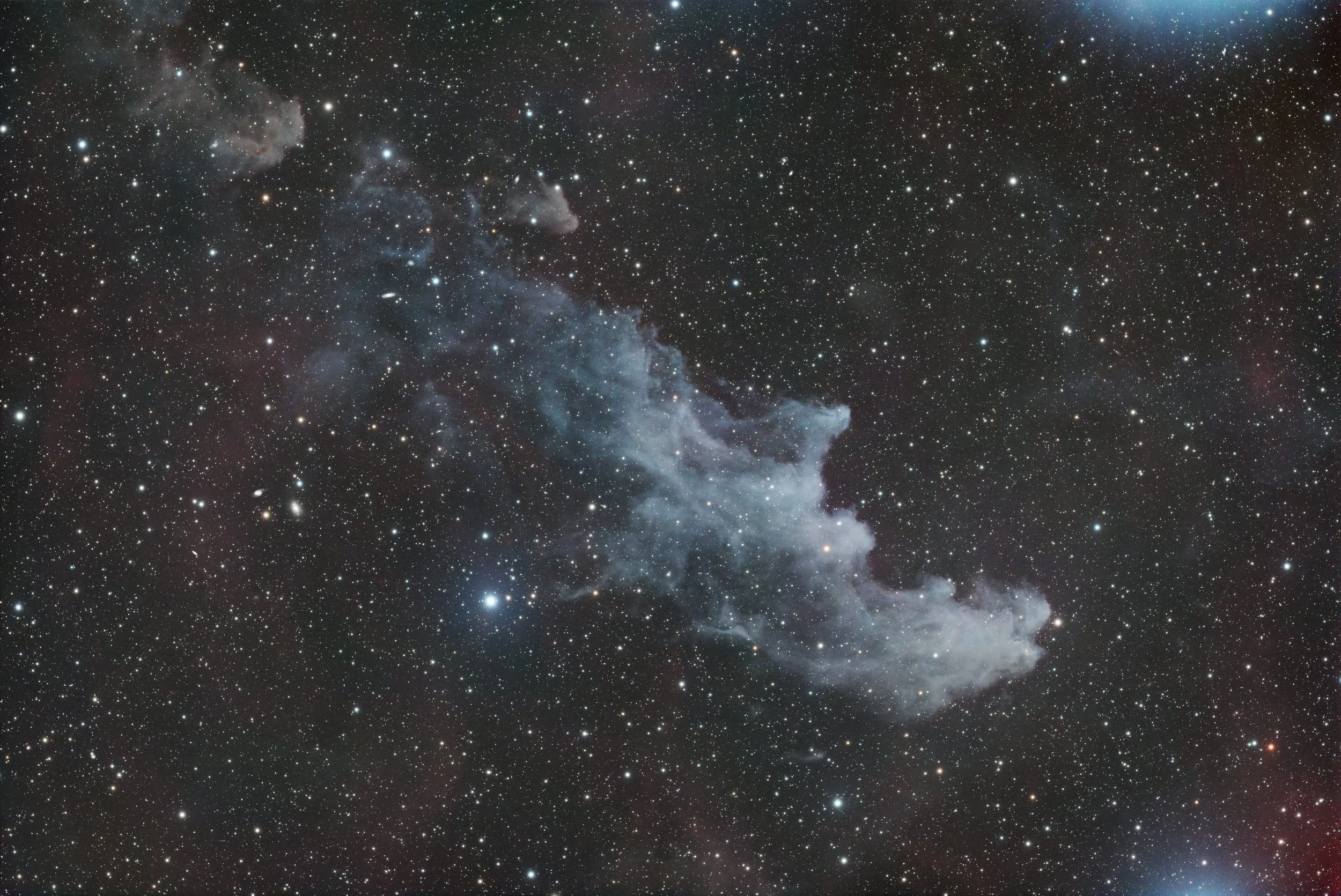
IC 2118 The Witch Head Nebula (LRGB)
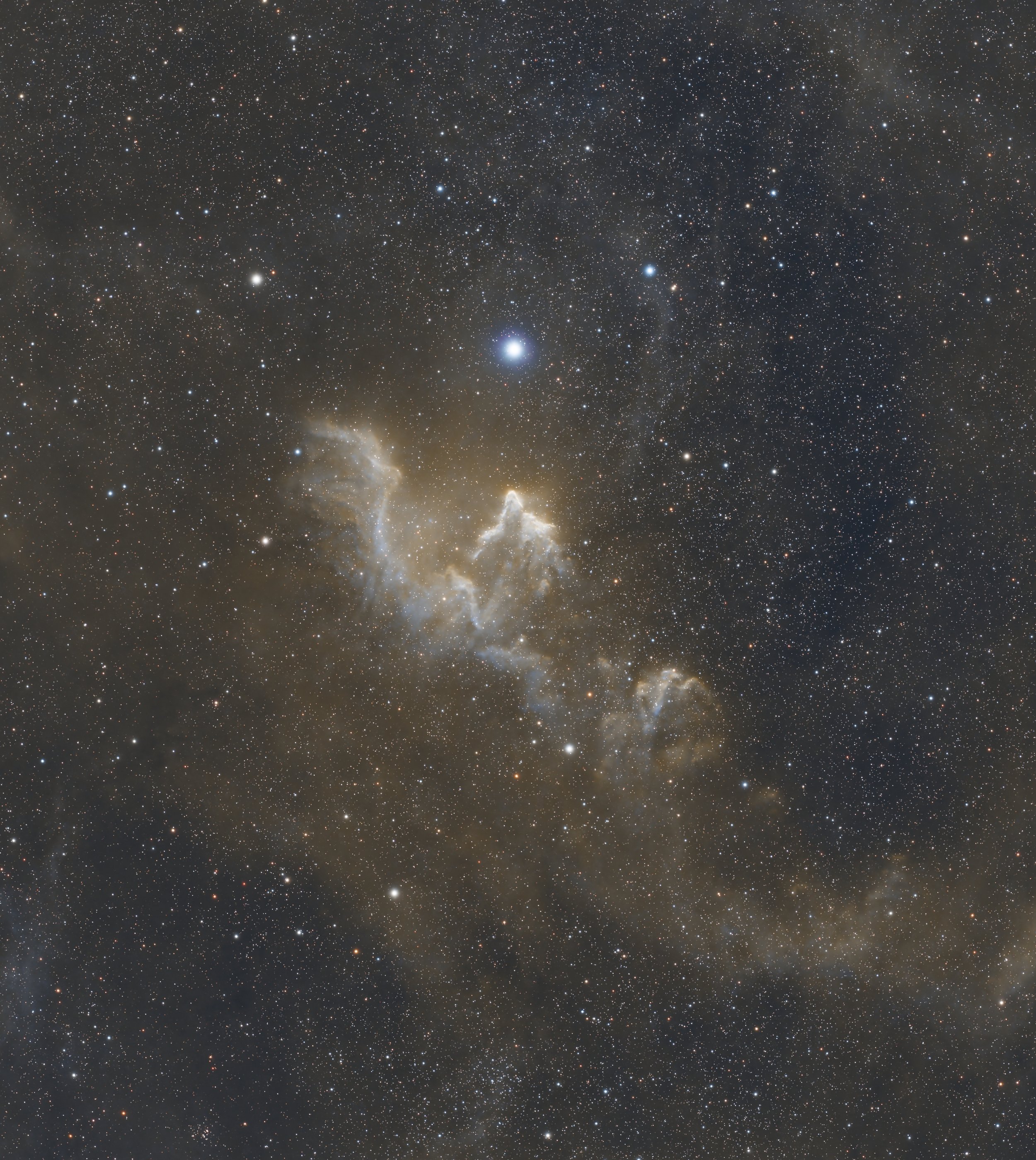
Sh2-136 The Ghost Nebula

M 45 The Pleiades (The Seven Sisters)

IC 4603 Region The Rho Ophiuchi Cloud Complex

NGC 7023 The Iris Nebula
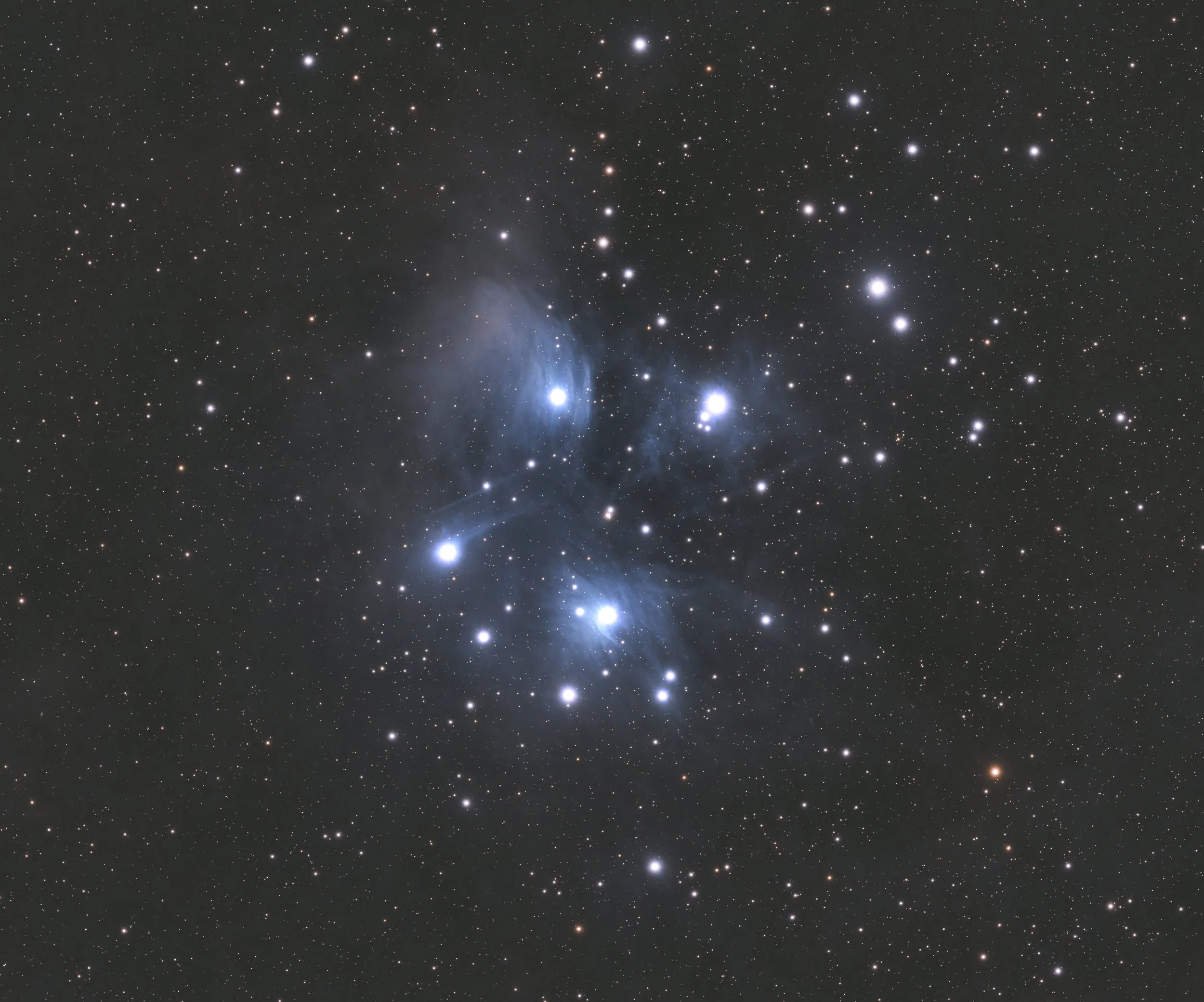
M 45 The Pleiades (The Seven Sisters)
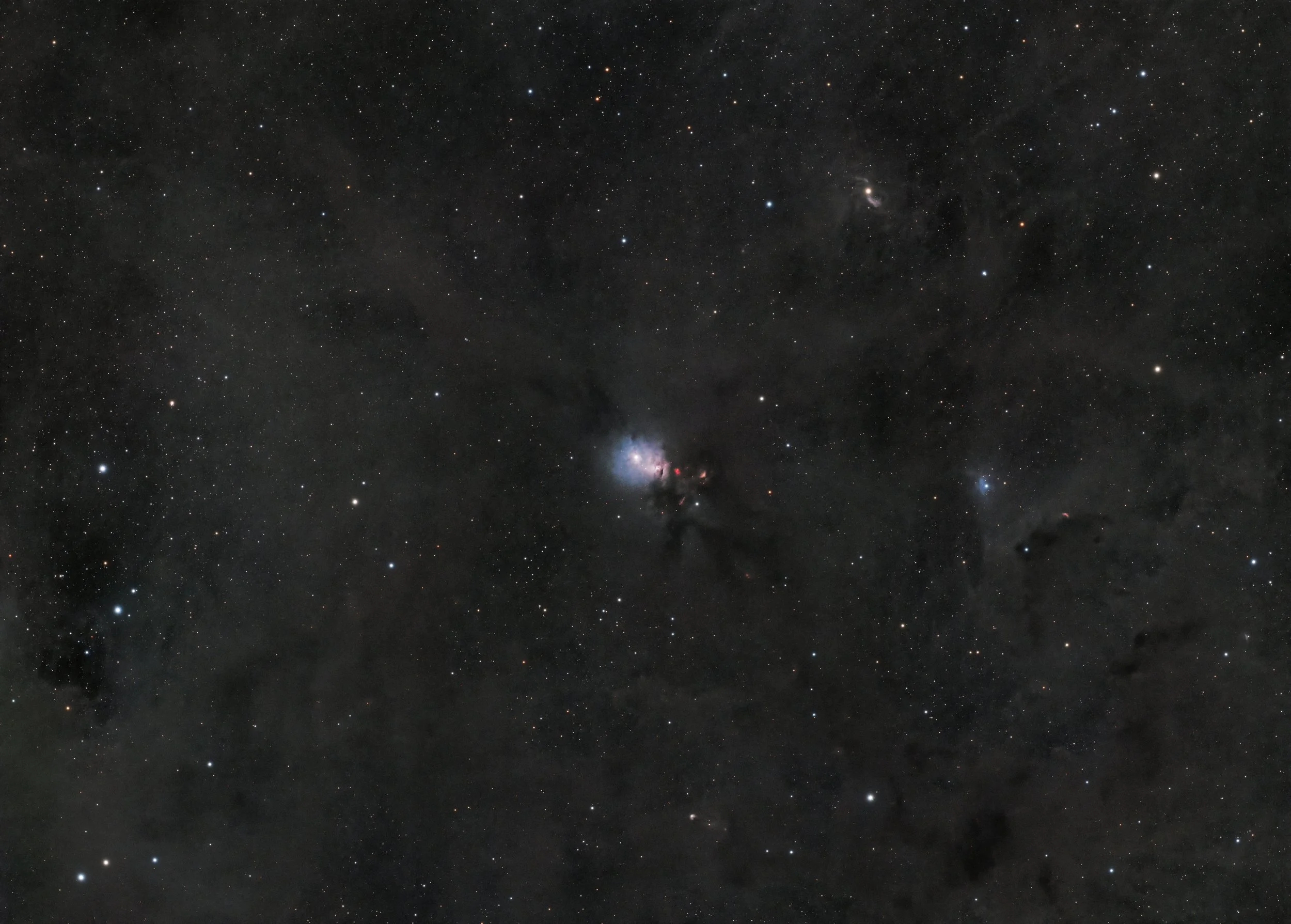
NGC 1333 The Embryo Nebula
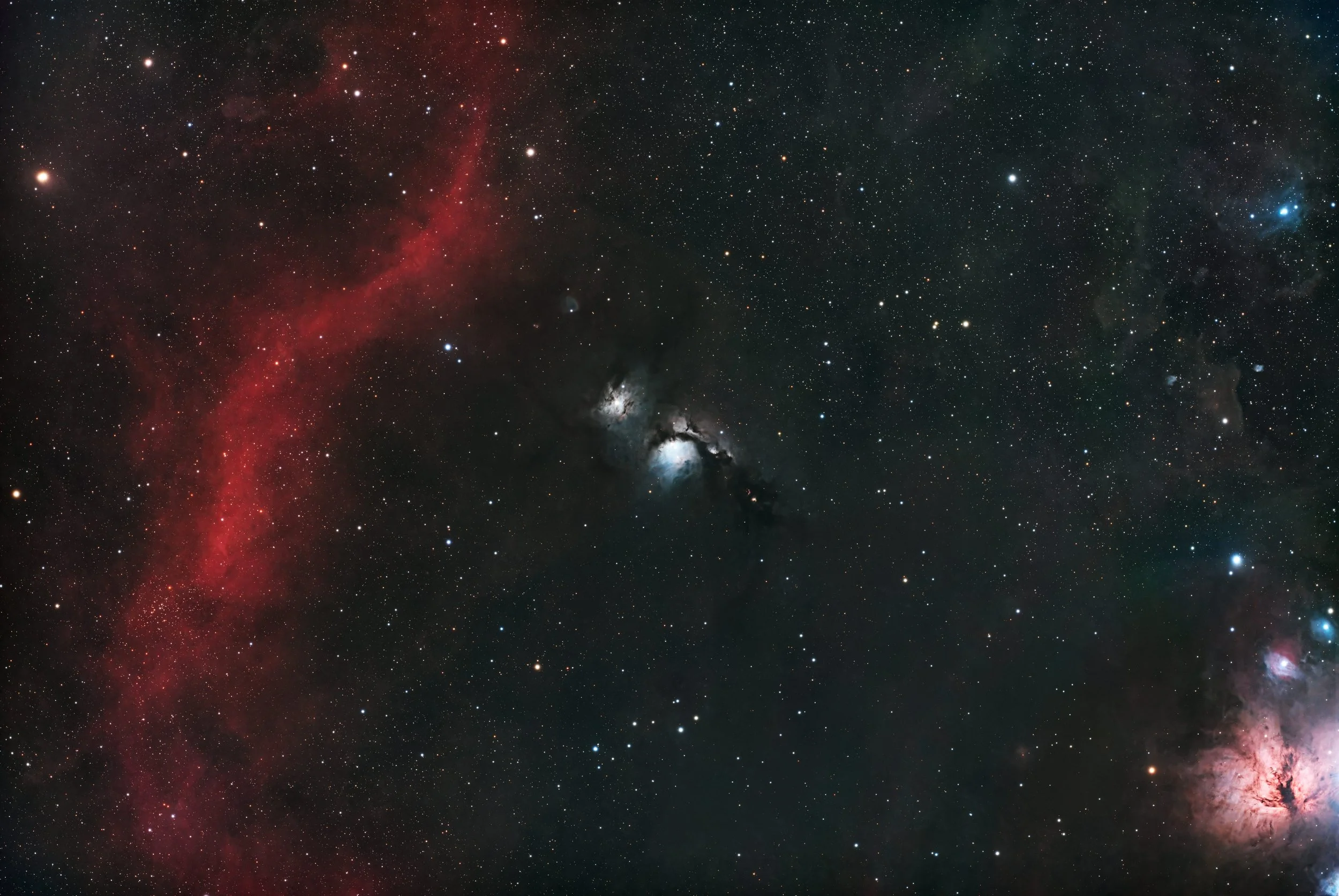
M 78 The Casper the Friendly Ghost Nebula