
An emission nebula is a celestial cloud of high-temperature, ionized interstellar gas and dust that emits its own visible light. Unlike reflection nebulae, which scatter light from nearby stars, emission nebulae are ionized—typically by ultraviolet (UV) radiation from nearby hot, young stars or stellar remnants—causing the gas to fluoresce and glow.
Key Characteristics
Composition: Primarily ionized hydrogen (often referred to as H II regions), along with helium, oxygen, and nitrogen.
Color: Often appear red or pink due to the strong emission of hydrogen-alpha light. Other colors, such as green or blue, can indicate the presence of ionized oxygen or helium.
Ionization Source: The gas is energized by UV photons from nearby massive, hot stars, causing electrons to jump to higher energy levels. When they fall back to lower levels, they emit photons (light).
Location: Often associated with stellar nurseries (star-forming regions), such as the Orion Nebula, where young stars are still surrounded by the gas from which they formed.
Note: Emission nebulae often coexist with dark nebulae (dust clouds that block light) and reflection nebulae (clouds that scatter light), sometimes appearing together in the same region, such as the Trifid Nebula.

NGC 7380 The Wizard Nebula (SHO)

NGC 7000 The North America Nebula (SHO)
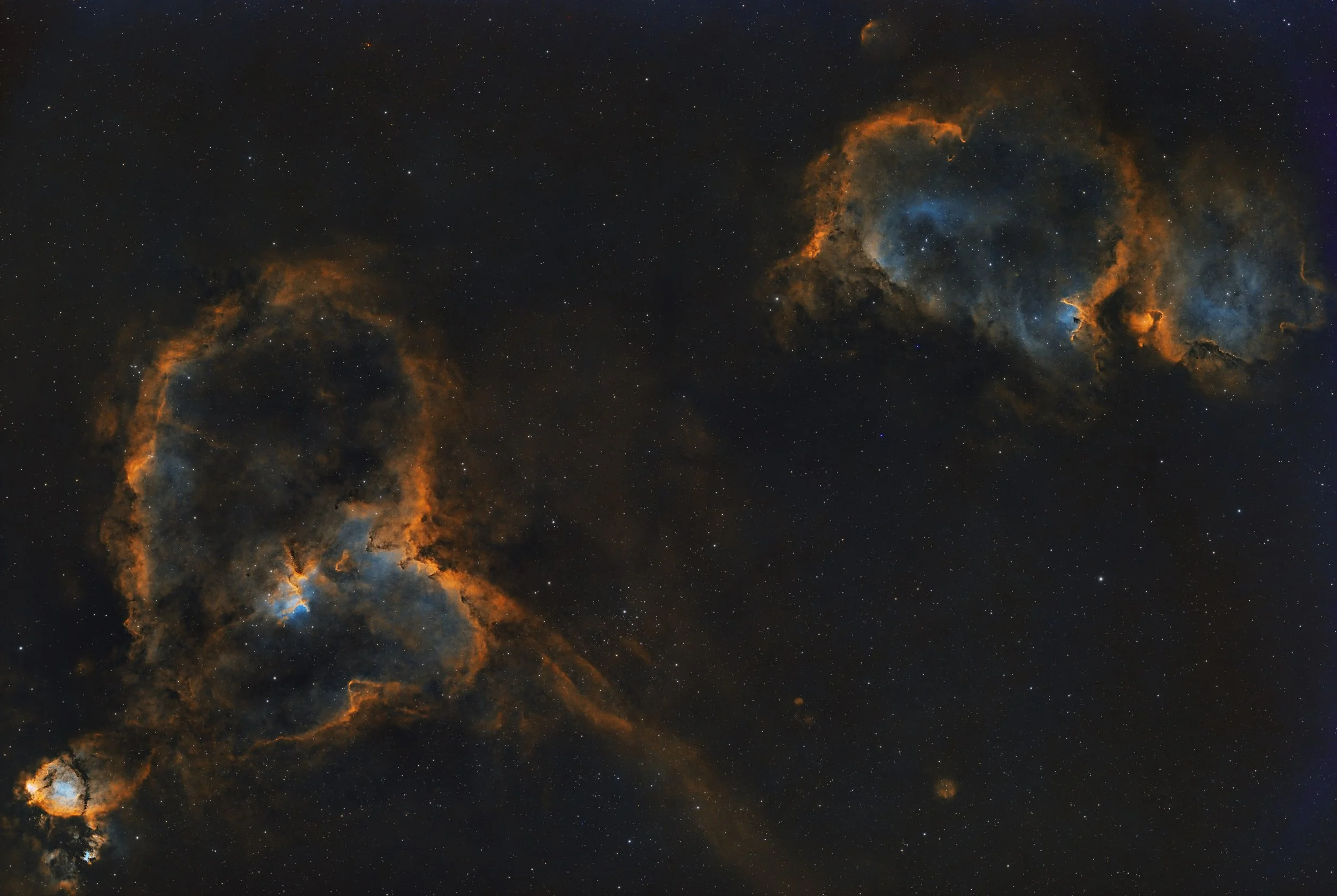
IC 1805 and IC 1848 The Heart and Soul Nebulas (SHO)
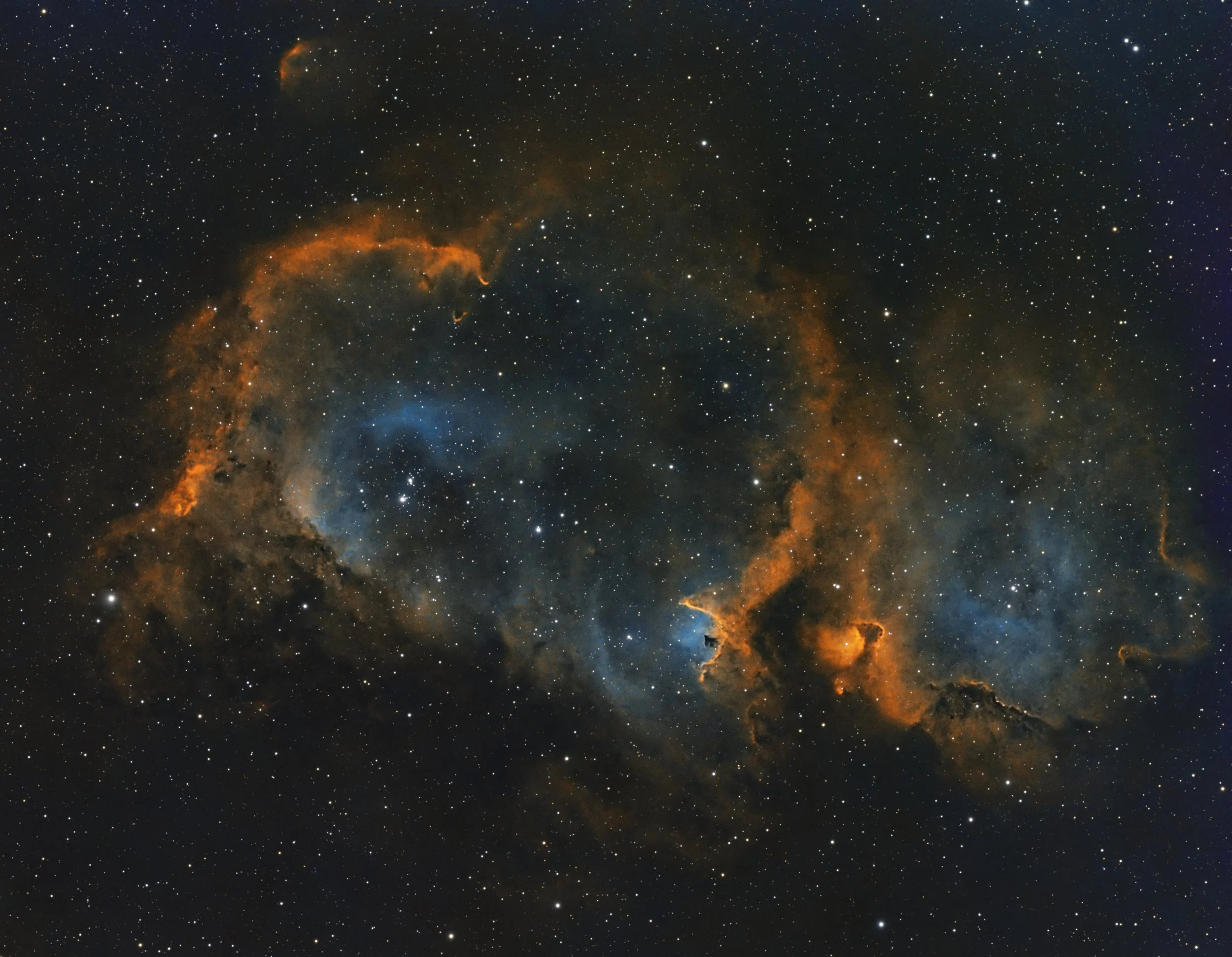
IC 1848 The Soul Nebula (SHO)
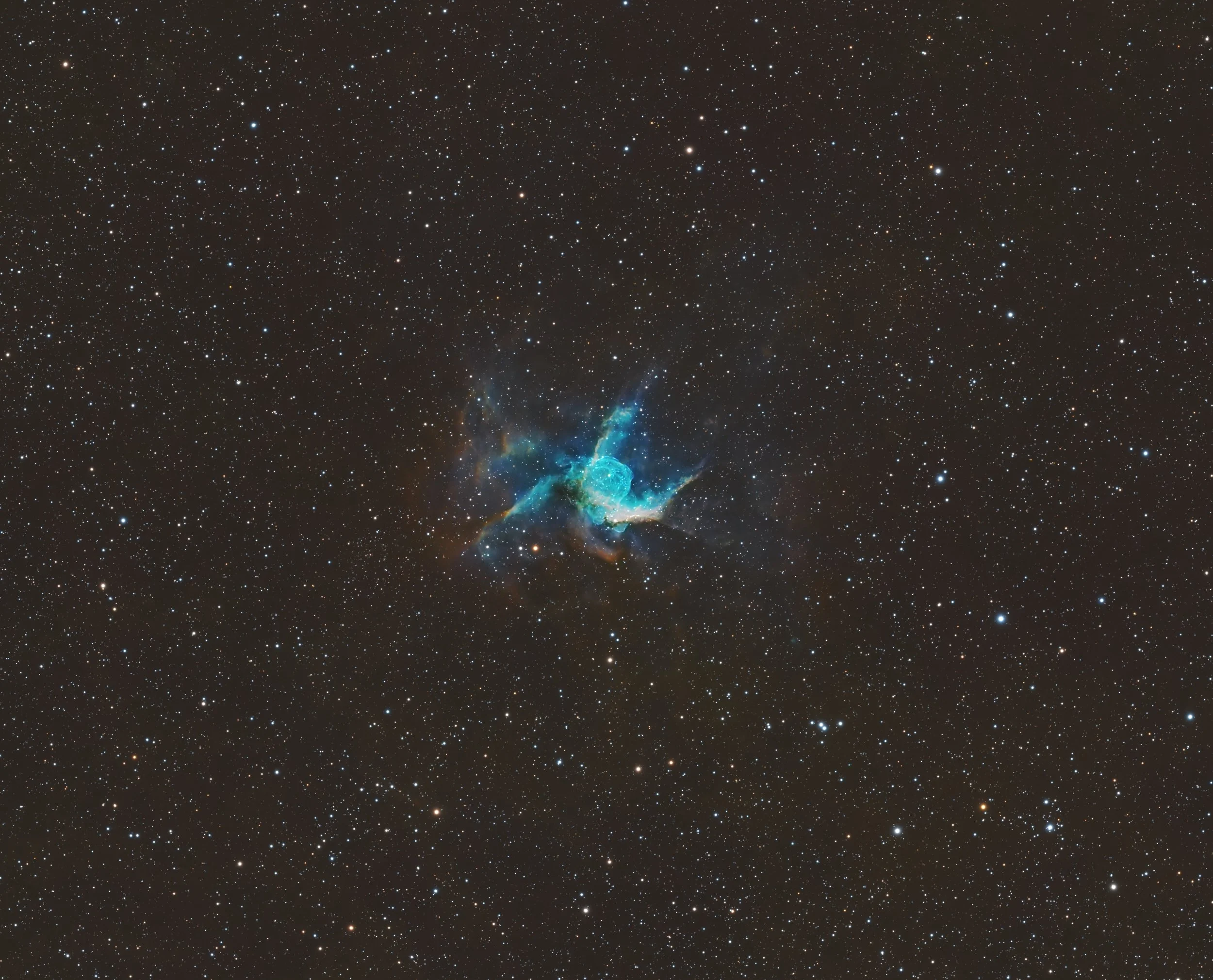
NGC 2359 The Thor's Helmet Nebula
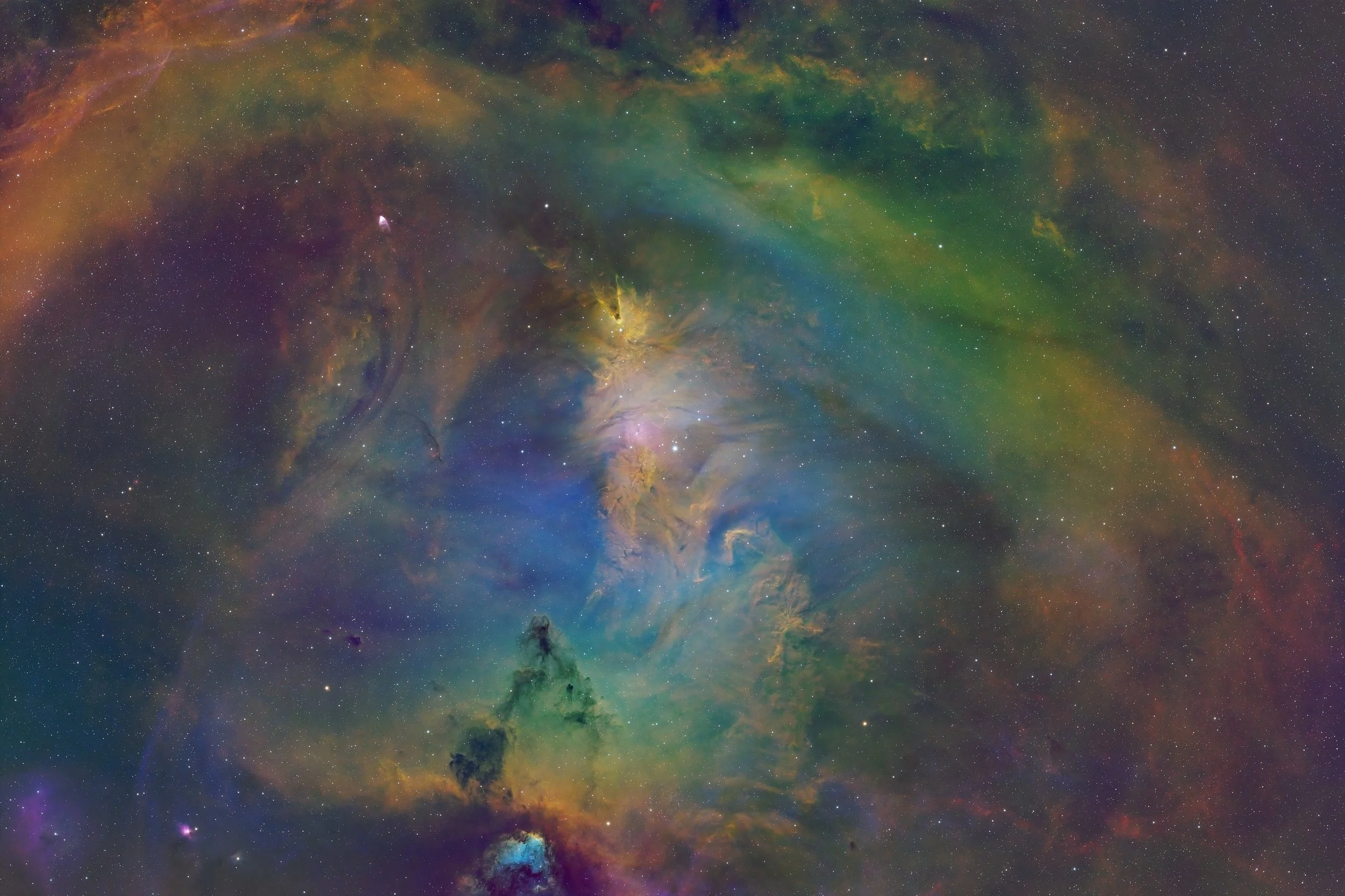
NGC 2264 The Christmas Tree Nebula (SHO)
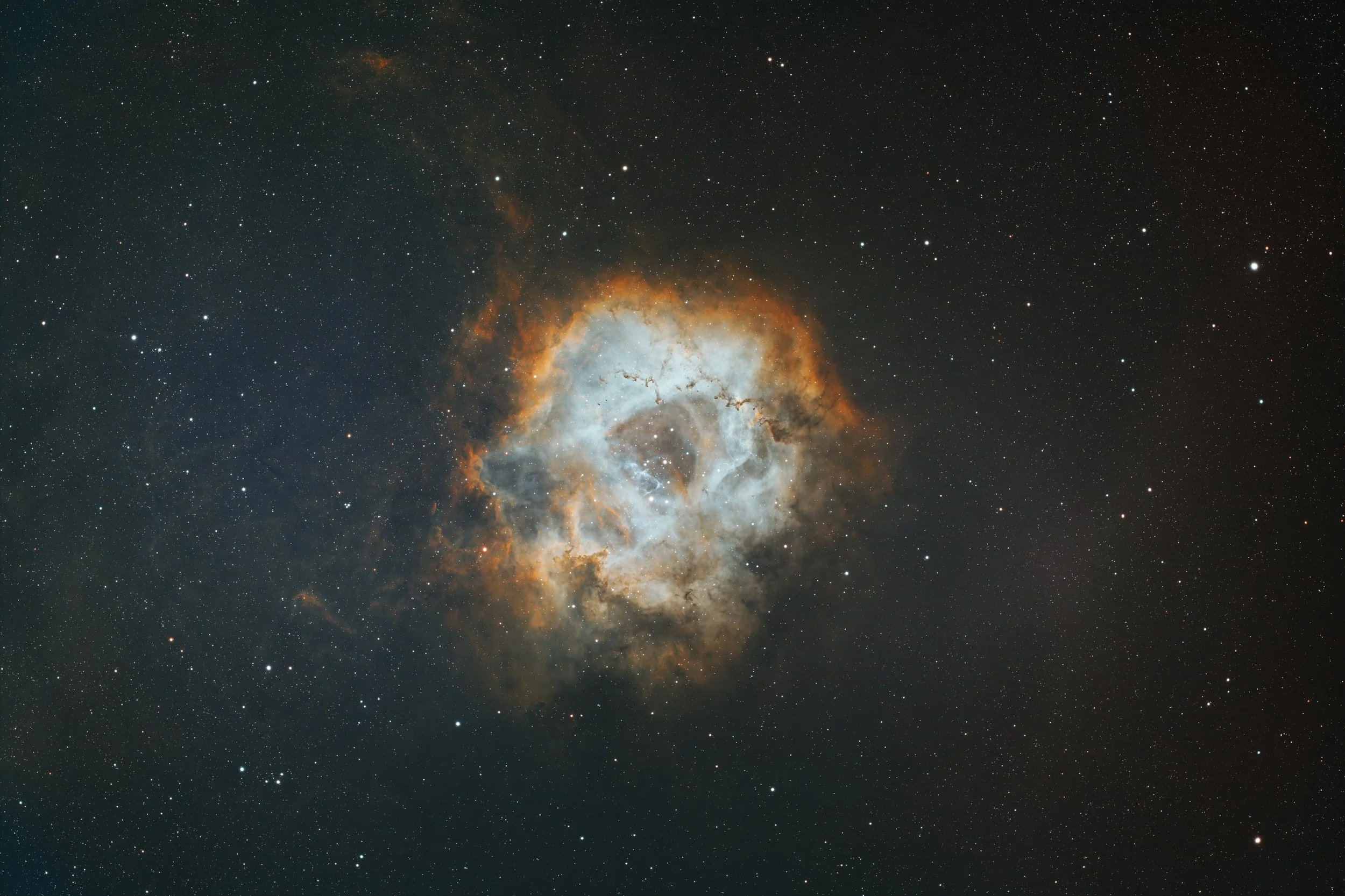
NGC 2244 The Rosette Nebula (SHO)

NGC 1499 The California Nebula (Mosaic in Foraxx palette)
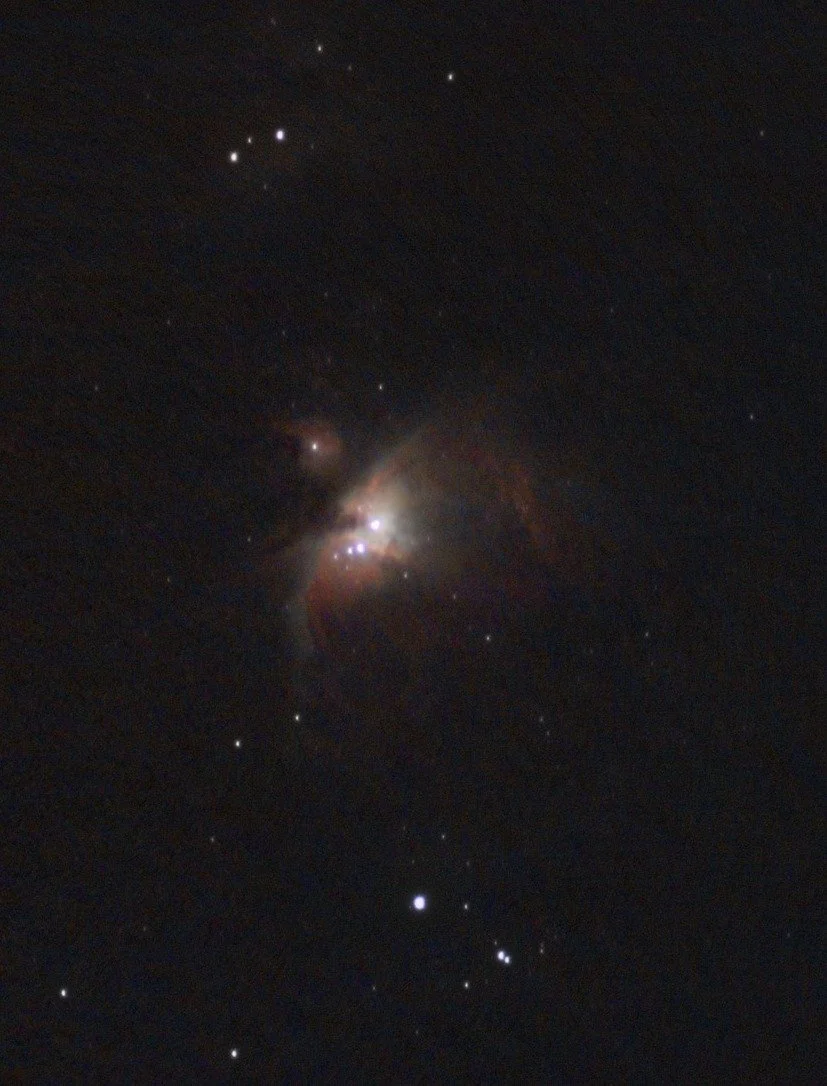
M 42 The Orion Nebula (my first astro photo - HOO)
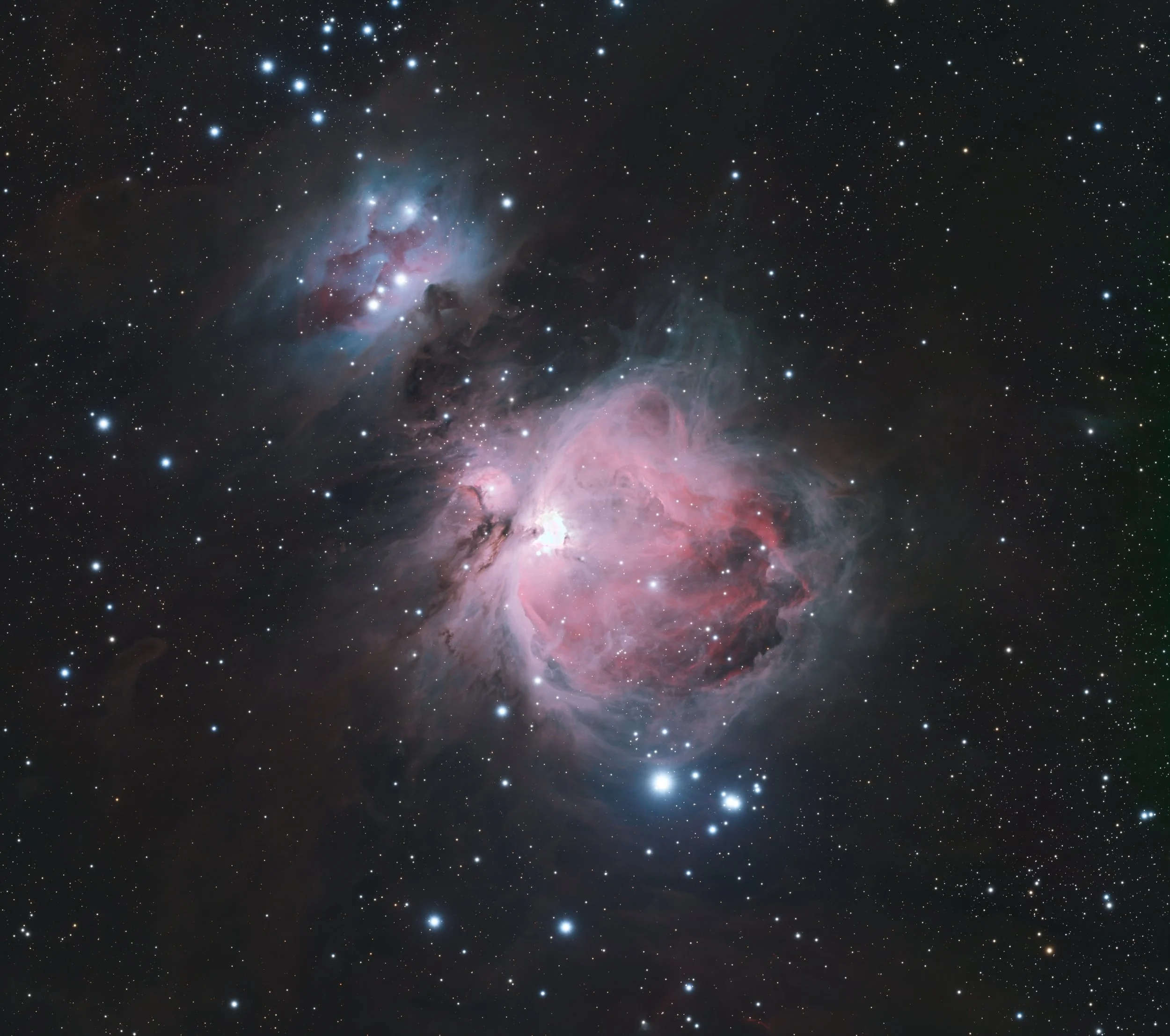
M 42 The Orion Nebula (my most recent attempt - HOO)
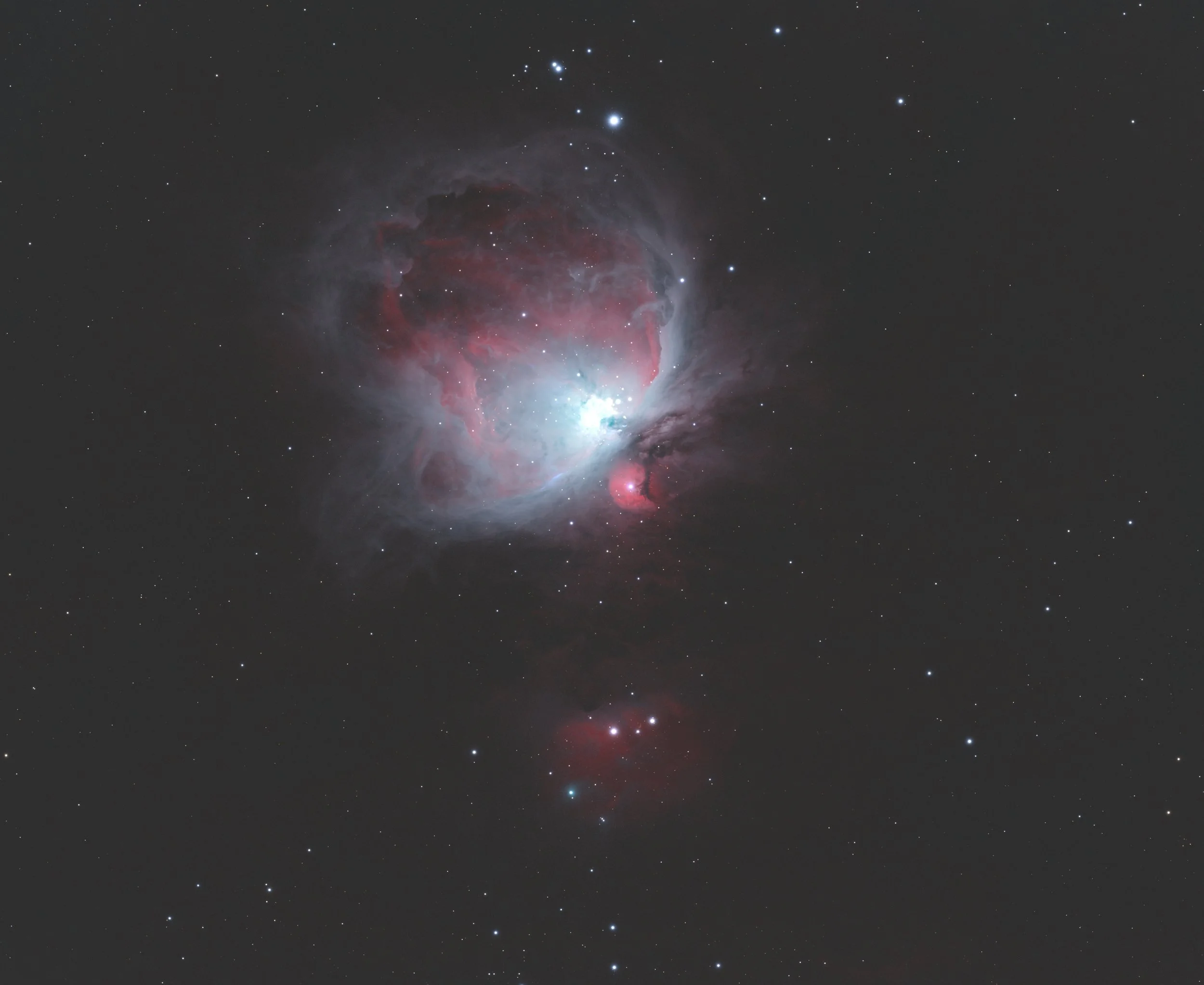
M 42 The Orion Nebula (HOO)
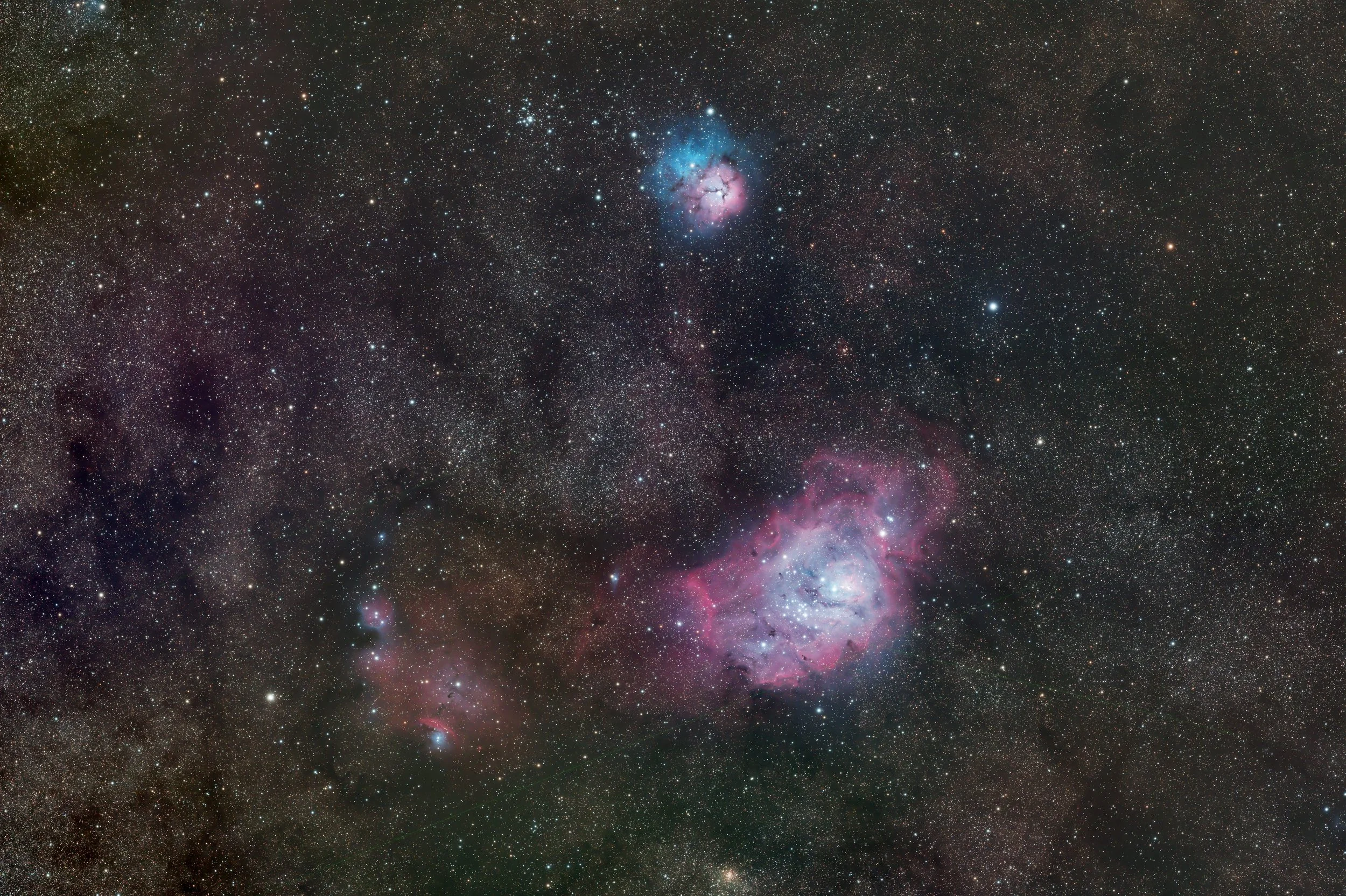
M 20 and M 8 The Triffid Nebula and the Lagoon Nebula
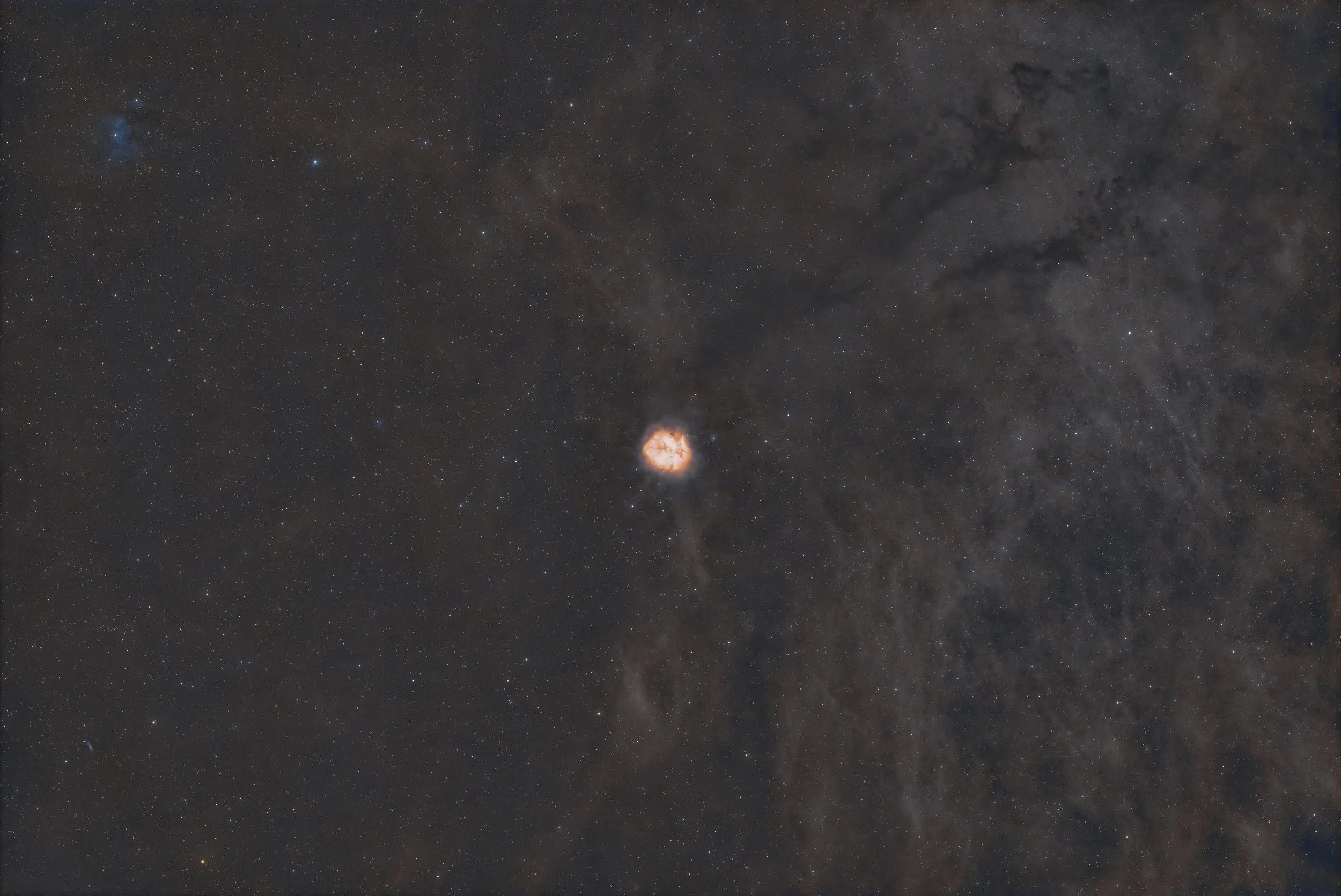
IC 5146 The Cocoon Nebula (HOO)

IC 1848 The Soul Nebula (SHO)
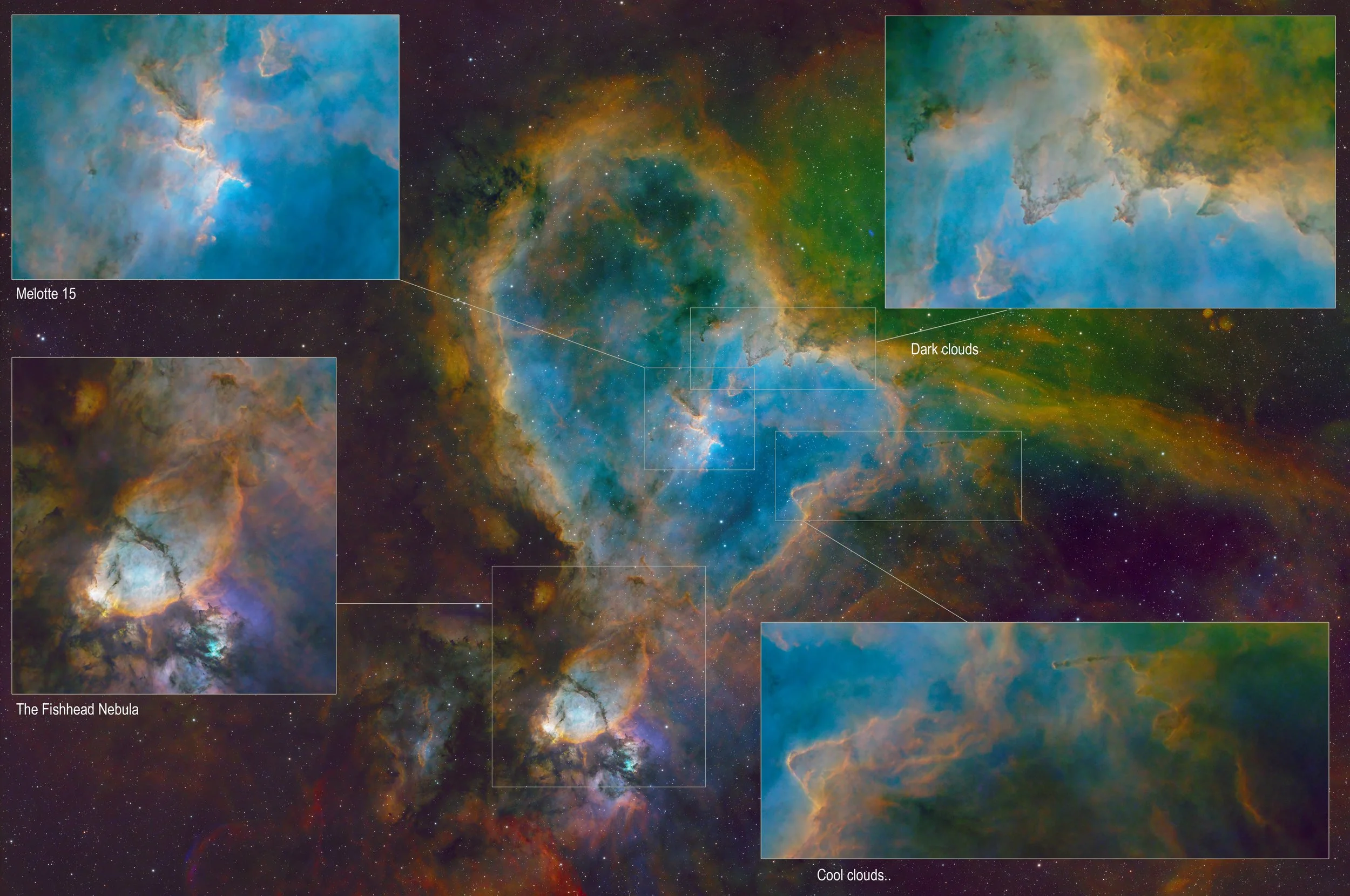
IC 1805 The Heart Nebula with insets
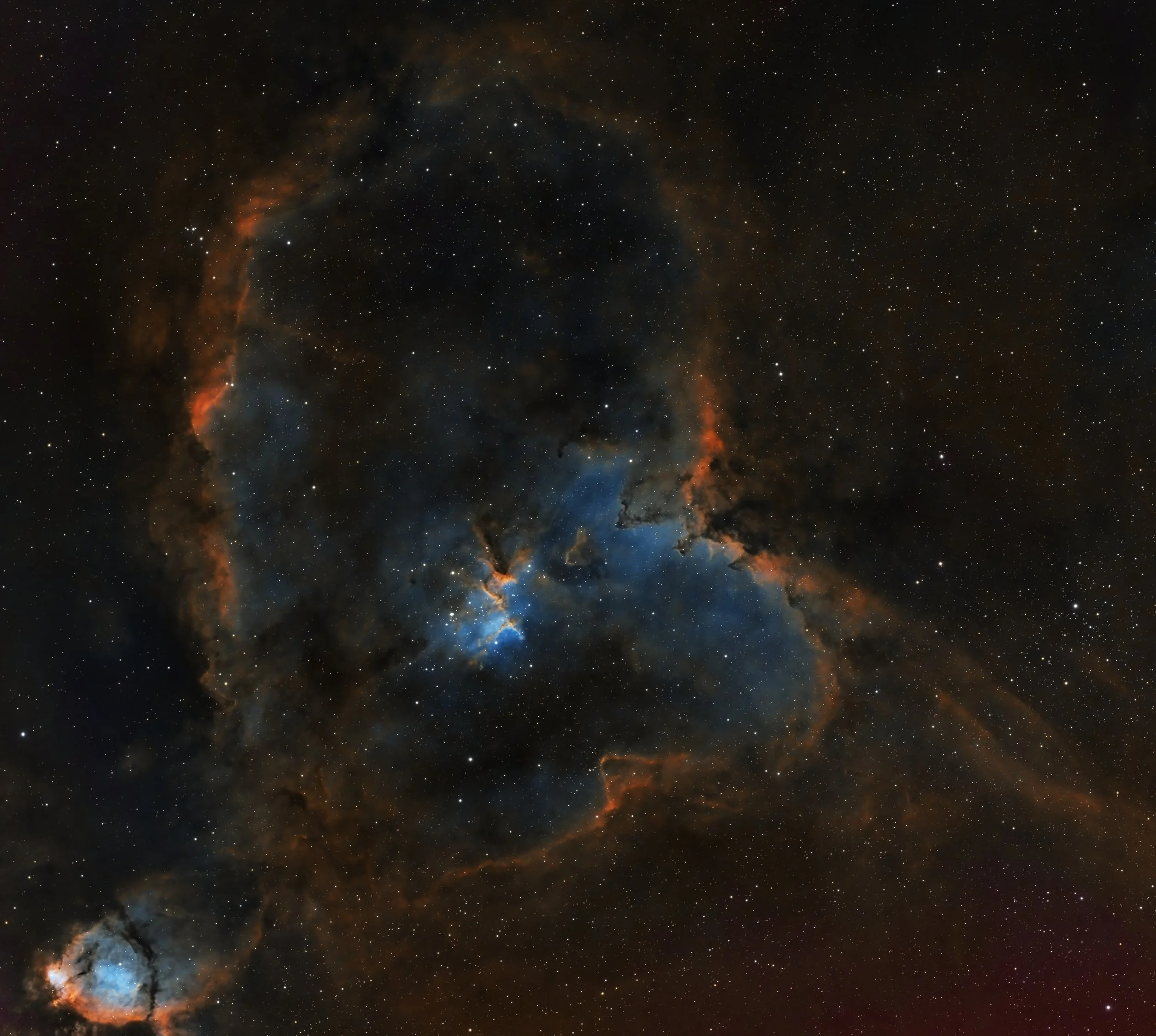
IC 1805 The Heart Nebula
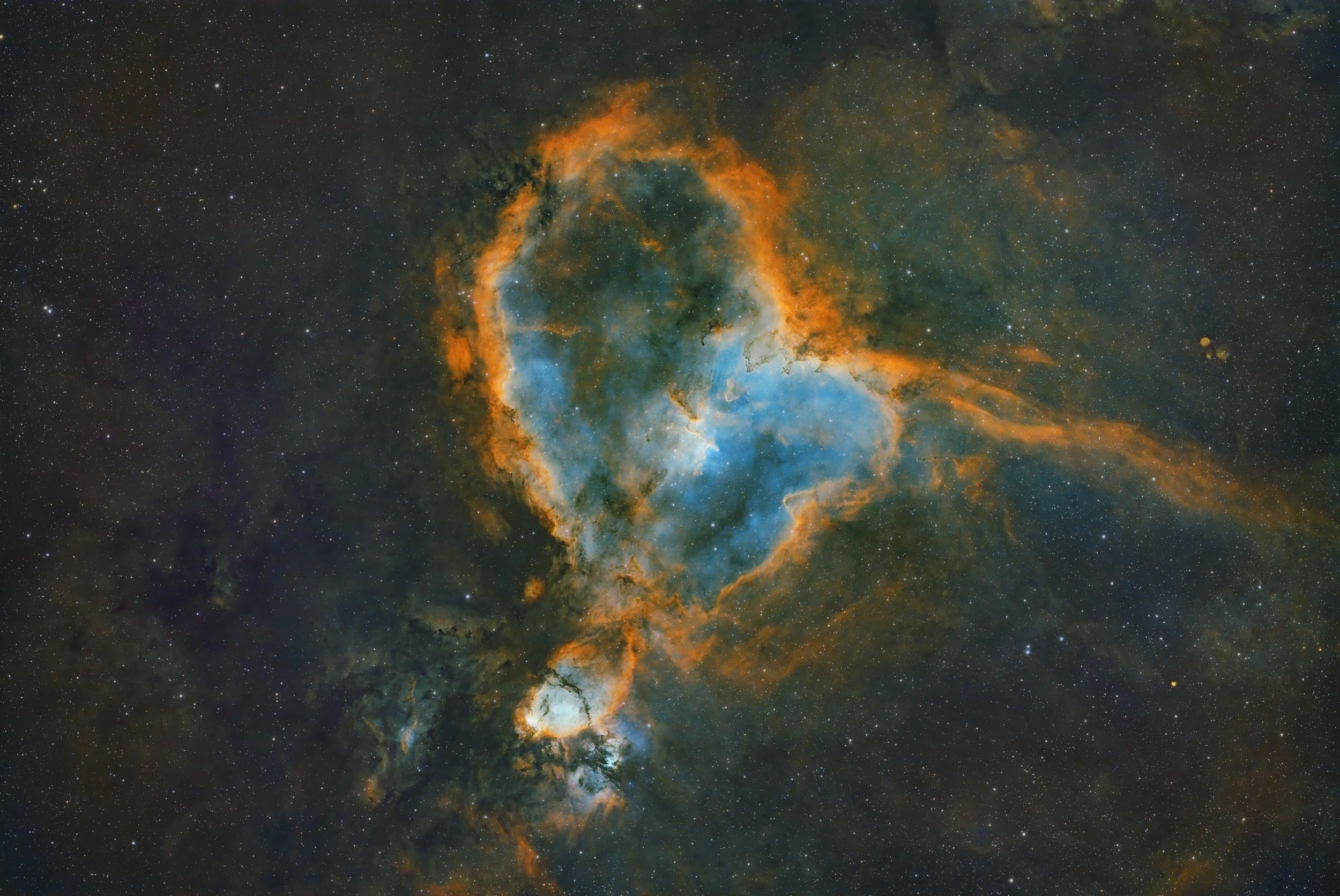
IC 1805 The Heart Nebula

IC 1396 The Elephant's Trunk Nebula (SHO)
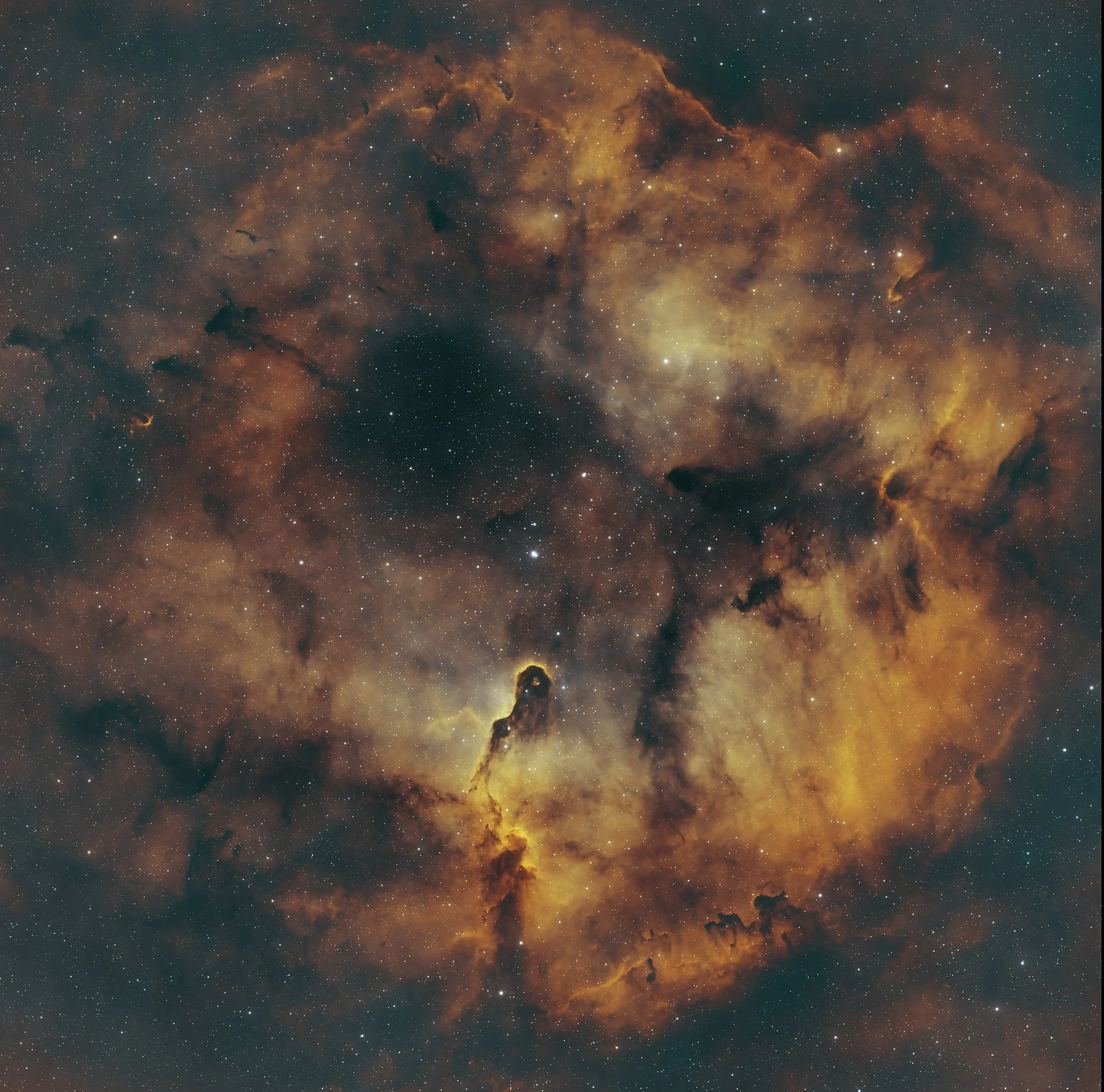
IC 1396 The Elephant's Trunk Nebula (Foraxx)
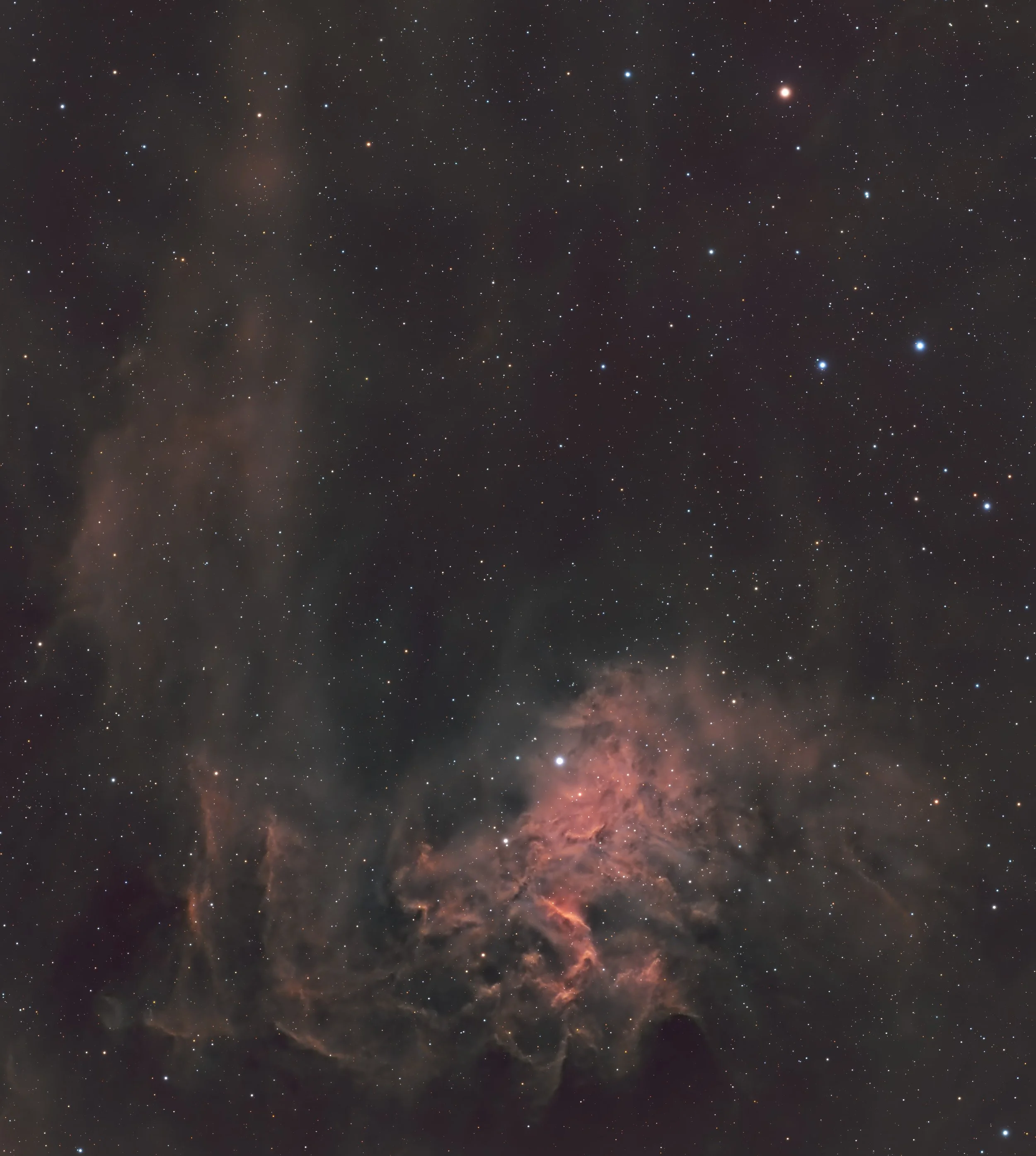
IC 405 The Flaming Star Nebula
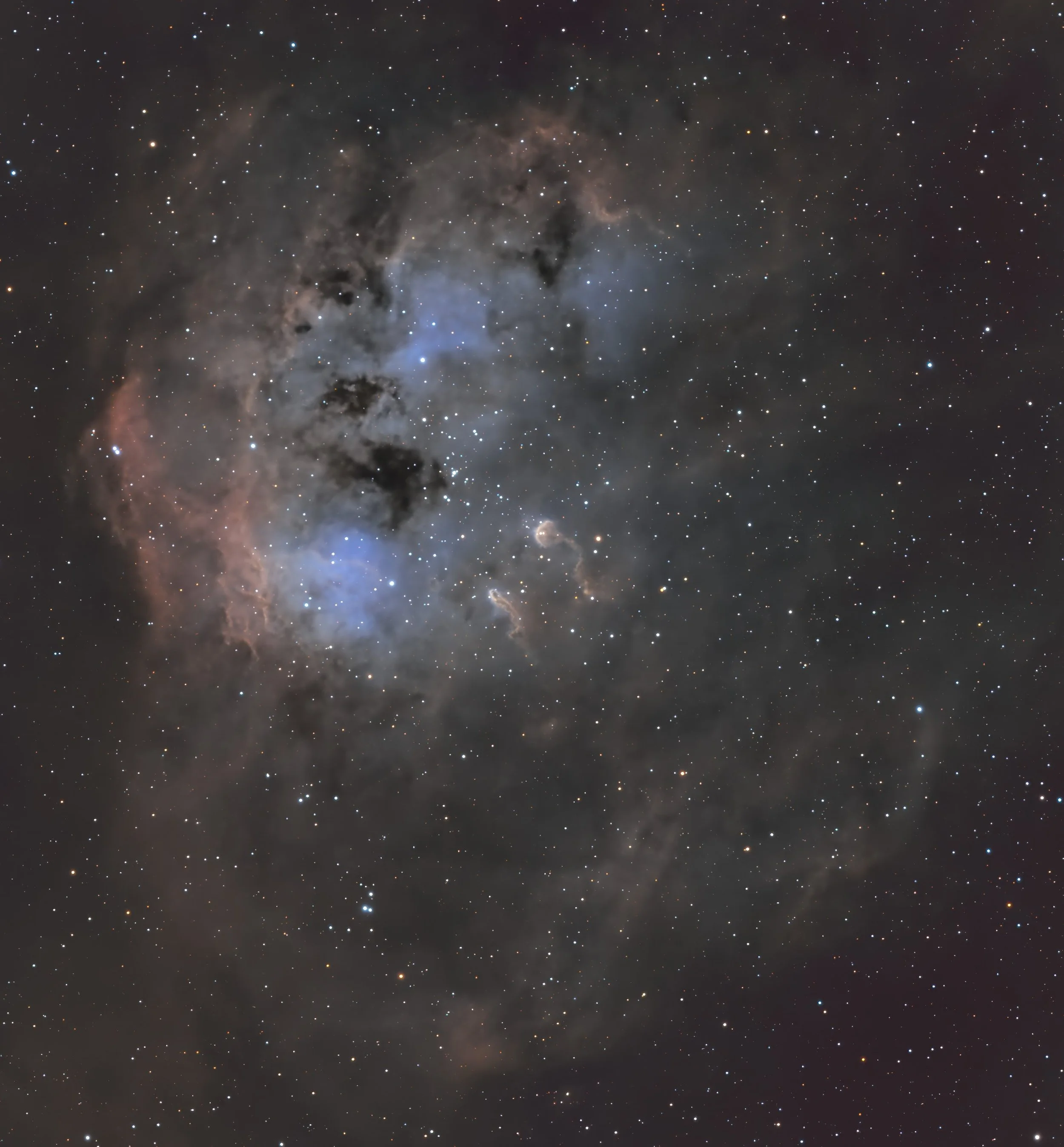
IC 410 The Tadpoles Nebula (SHO)
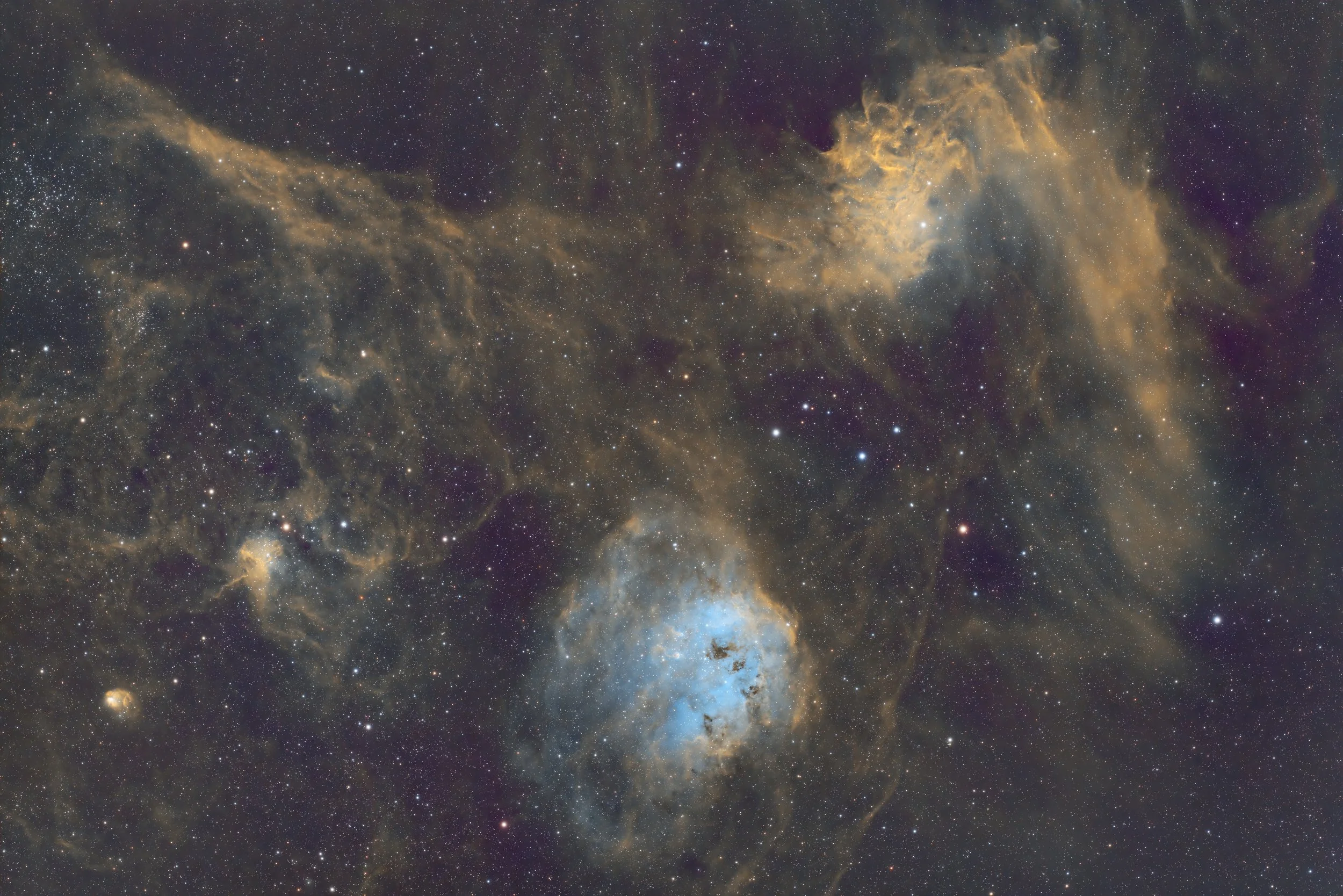
IC 405 and IC 410 The Flaming Star and Tadpoles Nebulas (SHO)

IC 405 and IC 410 The Flaming Star and Tadpoles Nebulas (Foraxx)
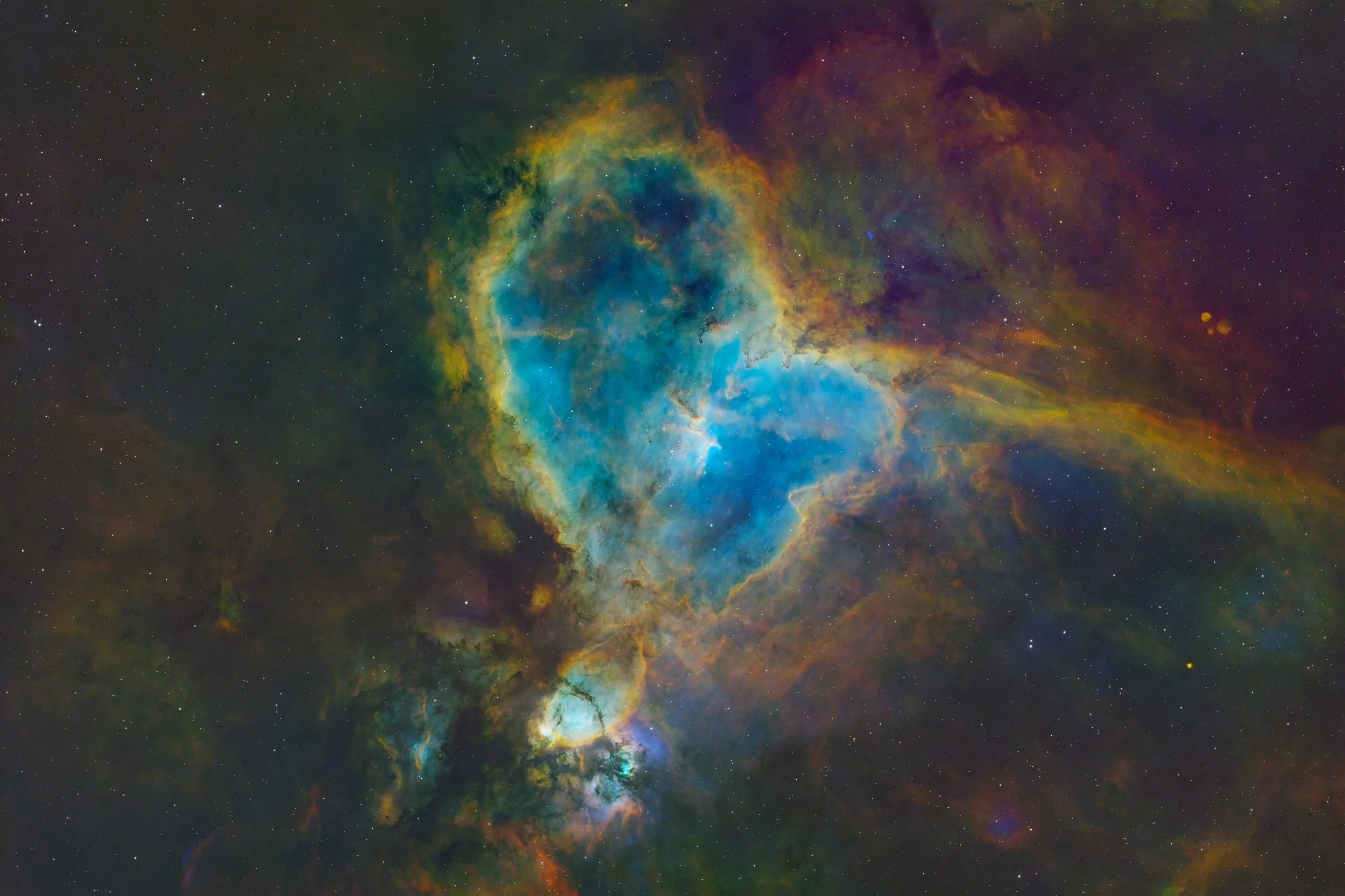
IC 1805 The Heart Nebula